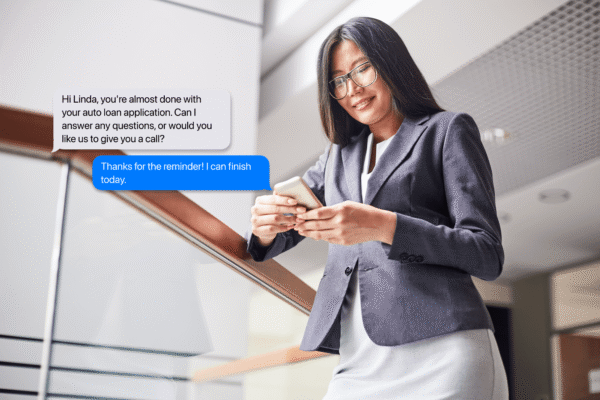



91% of customers say that they want to receive text messages from businesses.
As Gartner reports 98% open rates and a 45% reply rate for SMS, staggeringly higher than email’s respective 20% open rate and 6% response rate, it’s no wonder that texting has become an increasingly popular channel for brands to reach their customers.
However, only 39% of businesses are currently using SMS marketing, and even less—13%—enable SMS recipients to actually reply to text messages.
Conversational SMS bridges that gap with two-way SMS conversations. Two-way business texting enables businesses to engage with customers in a new way—one that consumers actually prefer.
With the high reply rates reported with texting, conversational SMS represents a huge opportunity for businesses that want to better connect with their customers.
Let’s talk about conversational SMS, how it differs from traditional SMS marketing, benefits and challenges, and how to actually implement it.
What is conversational SMS?
58% of customers report that texting is the best way for businesses to contact them, and conversational SMS allows businesses to engage in two-way conversations with customers via text.
In contrast to one-way SMS marketing, conversational SMS allows businesses to send and receive text messages with prospects and customers in real time.
As customer experience evolves, many customers now expect real-time communication with businesses across channels. Most people expect to not only receive text messages from brands, but be able to respond to them as well.
In a survey, 74% of consumers said that they respond to a text message from a business within one hour, in contrast to 41% who said they’d respond to an email in one hour.
Conversational SMS is a rapidly-growing solution, with the two-way SMS service market valued at over $3B in 2024 and projected to over double to $7.42B by 2033.
Two-way texting enables brands to meet customers where they are—on their smartphones.
While implementing SMS as a communication channel is a major step forward in terms of customer experience, SMS sees best results when brands allow customers to respond to messages.
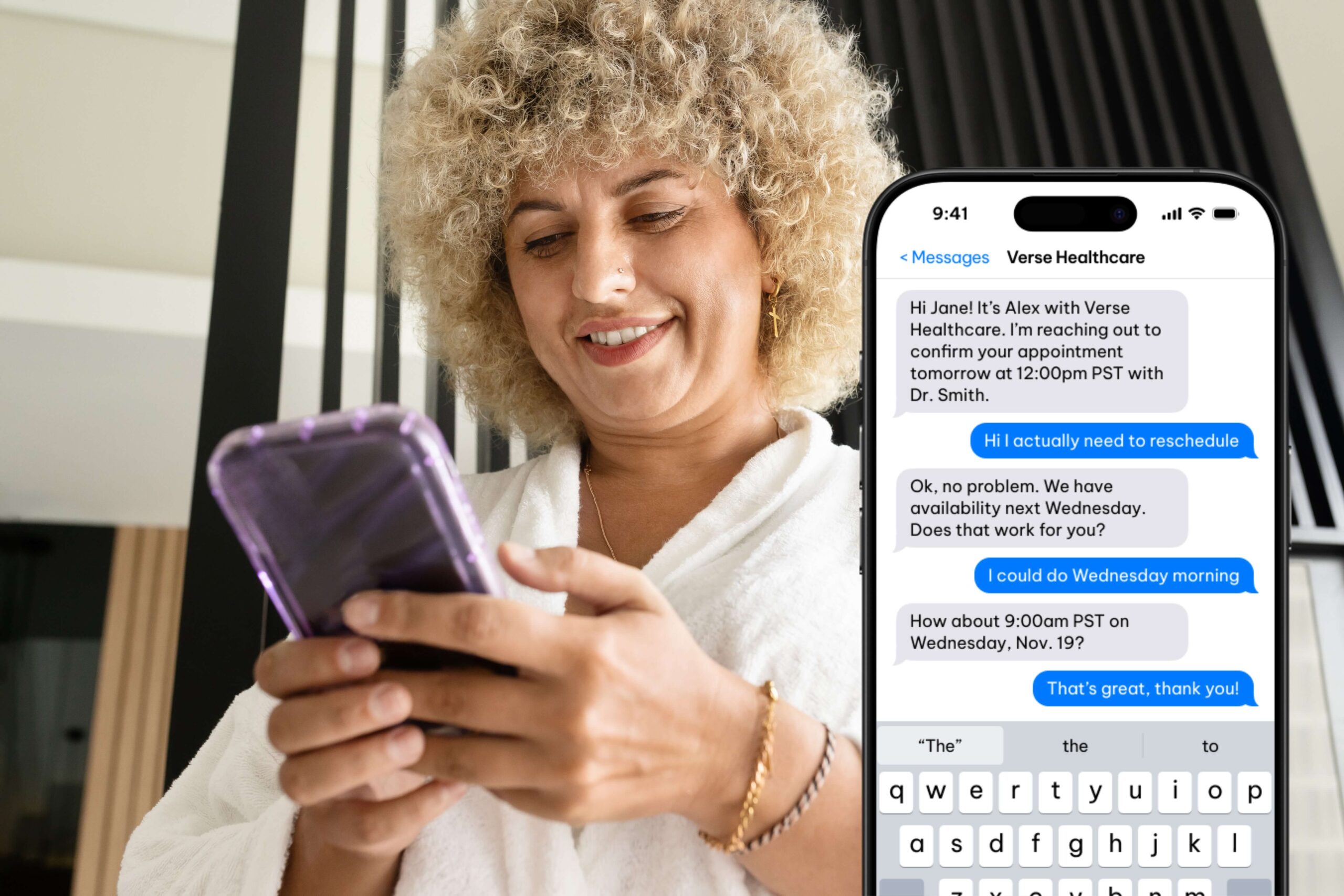
For example, customers like receiving appointment reminders via text, and these can be very useful in reducing no-shows. However, two-way SMS empowers customers to reschedule appointments right from that text conversation, or even ask any questions they may have at that moment.
Conversational SMS vs. SMS marketing
Conversational SMS differs from SMS marketing, or promotional SMS, because it allows customers to reply to messages. While SMS marketing does produce results, conversational SMS can take it to the next level, engaging customers in a new way.
Brands are shifting away from mass marketing messages and instead towards more meaningful 1:1 conversations with customers, meeting them where they are in their journey.
| Conversational SMS | SMS marketing |
| Two-way | One-way |
| Can be initiated by customers or businesses | Business-initiated only |
| Interactive | Static |
| Personalized and highly-customizable | Limited personalization; mass messages |
| Promotes customer engagement and loyalty | Promotes product awareness |
| Can send discounts or offers | Can send discounts or offers |
Conversational SMS can be integrated with marketing in order to send personalized marketing messages that offer discounts or offers, just as regular SMS marketing would. The difference is that these messages are customizable and enable replies.
While SMS marketing does boast higher engagement rates than email marketing, conversational SMS has even higher engagement rates and lower opt-out rates than traditional SMS marketing campaigns.

Benefits of conversational SMS
Conversational SMS helps brands capitalize on the many benefits of SMS communications, while improving engagement and customer satisfaction.
As consumers expect more personalized, real-time conversations, two-way SMS is becoming increasingly essential to creating real connections with customers to drive loyalty and conversion.
Benefits include:
- Higher engagement rates: Two-way conversations naturally facilitate better customer engagement.
- Personalized messaging: With conversational SMS, messaging can be tailored to the recipient, even referencing past interactions.
- Better support: For service and support, SMS offers faster issue resolution without phone calls.
- Smoother customer experience: Conversational SMS offers a better experience overall, allowing people to ask questions, reschedule appointments, or resolve issues from anywhere, without getting on the phone.
- Increased customer satisfaction: While two-way texting feels more human than one-way promotional blasts, it also meets customers wherever they are.
- Meeting customer preferences: Many customers prefer text; in fact, 63% of people say that they would switch to a brand that offered texting as a channel.
Use cases for conversational SMS
Where can you use conversational SMS? Common real-world applications include confirmations, scheduling, updates, appointment reminders, lead qualification, lead follow-ups, service requests, and FAQs. In fact, a study showed that 67% of consumers prefer texting about appointments or reminders.
Here are some examples of how conversational SMS can be used across industries:
Home services
Conversational SMS is great for following up on home services inquiries, qualifying leads, providing service confirmations, appointment scheduling, and project updates.
Healthcare
For healthcare, conversational SMS is popular for appointment scheduling, confirmation, and reminders, as well as answering care questions, routing inquiries to the right department, and prescription pickups.
Real estate and mortgage
With real estate and mortgage, leads are dealing with a huge purchase that will impact the rest of their lives—which is why conversational SMS can help build trust, answer questions instantly, and ask qualifying questions. Conversational SMS is great for pre-qualifying leads, scheduling appointments or tours, and following up with leads before the competition.
Insurance
Conversational SMS for insurance helps give immediate answers, especially for quote requests, consultation appointments, or claim updates.
Other industries
The use cases for conversational SMS can vary widely depending on the industry. If you get proper opt-ins to text customers, you can text them for any relevant business purpose! Common use cases across industries include lead follow-up and qualification, appointment scheduling and reminders, updates, and answers to non-complex questions.
Challenges of conversational SMS
While conversational SMS has many benefits across industries, it also comes with challenges, including:
- SMS compliance: Proper opt-ins and opt-outs are key, and anyone who texts on behalf of the business must understand state and federal SMS compliance laws.
- A2P 10DLC registration: In order to text, you’ll need to register a phone number for texting with A2P 10DLC.
- Agent bandwidth: If you’re texting manually, ensure that agents have the bandwidth to handle SMS conversations and reply in a timely manner.
- Consistent scripting: To ensure consistency, you’ll need to design scripts for agents to follow while texting.
- Speed to reply: Texting benefits customer experience and satisfaction, but not if you take too long to reply. Studies show that people expect replies in 5 minutes or less, and this can present a huge challenge for teams that are texting manually.
How conversational SMS works
Most businesses implement conversational SMS with specialized solutions. Conversational SMS solutions work by centralizing text conversations for a business in a shared platform, and can integrate with CRMs and related software.
To implement conversational SMS, you’ll need:
- Compliant opt-ins and functional opt-outs
- A platform to send and receive SMS in a centralized inbox
- A registered phone number to send and receive SMS
For example, if using conversational SMS for lead generation, you’ll need to add compliant language to your opt-in forms and provide clear and functional opt-outs in your first text to the consumer. When a lead fills out the form, a text should immediately be sent with identifying information and an opt-out.
From there, a human rep can start texting the lead, or you can use an AI-powered solution to begin conversations. It’s important that your team has the bandwidth to scale these conversations and you have a plan to ensure quick replies.
This is why SMS solutions are becoming increasingly popular for brands.
SMS solutions come in many different forms, from basic SMS platforms to fully-managed texting solutions. Solutions like Verse fully manage SMS communications, doing the heavy lifting involved with SMS implementation and conversation management.
AI-powered SMS takes the weight off of human teams because it handles top-of-funnel conversations and passes off complex or high-value conversations to human teams. This approach both saves human teams time and improves customer experience by providing fast replies for every single person.

Choosing a conversational SMS platform
When choosing a conversational SMS platform, you’ll want to look for:
- Compliance support to mitigate any compliance risk and maintain customer trust
- Integration to ensure proper data sync with your CRM and related software
- Shared inboxes for SMS visibility
- Custom workflows for your use cases
- Analytics and reporting so you can see message performance and adjust as needed
Depending on your team bandwidth, you may want to opt for AI-powered solutions to help your team handle the workload that SMS can bring.
- If you’re looking for AI assistance to help your team reply to SMS conversational quickly and qualify inquiries, evaluate the AI used, ensure it’s compliant, and look for human-in-the-loop AI solutions that reduce AI errors.
- If looking for a manual, live agent option, be sure that features include agent enablement so that your team is well-equipped to text.
Verse: Fully-managed conversational SMS
Verse is a fully-managed SMS solution that helps your team implement texting and scale for high lead volumes without investing in any additional resources.
Verse is an AI-powered, conversational SMS platform with:
- 24/7 response via text
- Human-in-the-loop oversight
- Seamless CRM integration
- Live transfers to your team
- Automatic lead qualification
Looking to offer two-way texting without draining your team? Book a demo with Verse to get started, or check out our interactive demos here.
Key takeaways: Two-way SMS