



Trying to build a robust sales pipeline? Start with the right marketing lead sources.
For marketing, one of the biggest challenges is consistently generating high-quality leads that convert. It can be incredibly difficult to allocate a lead generation budget effectively, balancing lead volume and quality.
Luckily, we’ve compiled some compelling data on seven B2C marketing lead sources to show which get the highest volume, engagement, and qualification.
What are marketing lead sources?
In marketing, a lead source refers to the channel through which potential customers first discover your brand—or, in other words, the channel where the lead was generated. Examples of marketing lead sources include websites, social media, paid ads, etc.
For example, if a lead discovers your page via a Facebook ad and then fills out a form on your website, the lead source is Facebook ads.
Inbound leads vs. outbound leads
Marketing lead sources can further be classified as inbound or outbound. Inbound leads are generated through interest: they come to you. Outbound leads are generated through marketing or sales outreach: you go to them.
Inbound leads are often more valuable than outbound because these leads have already expressed interest in a product or service and are actively seeking solutions. Since outbound leads are cold leads, they are less likely to be interested.
For this reason, marketing teams usually focus more on inbound leads: generating interest by promoting the brand on various marketing channels.
7 highest-converting marketing lead sources
At Verse, we handle thousands of marketing leads on a daily basis for our clients—and these leads come from a variety of sources.
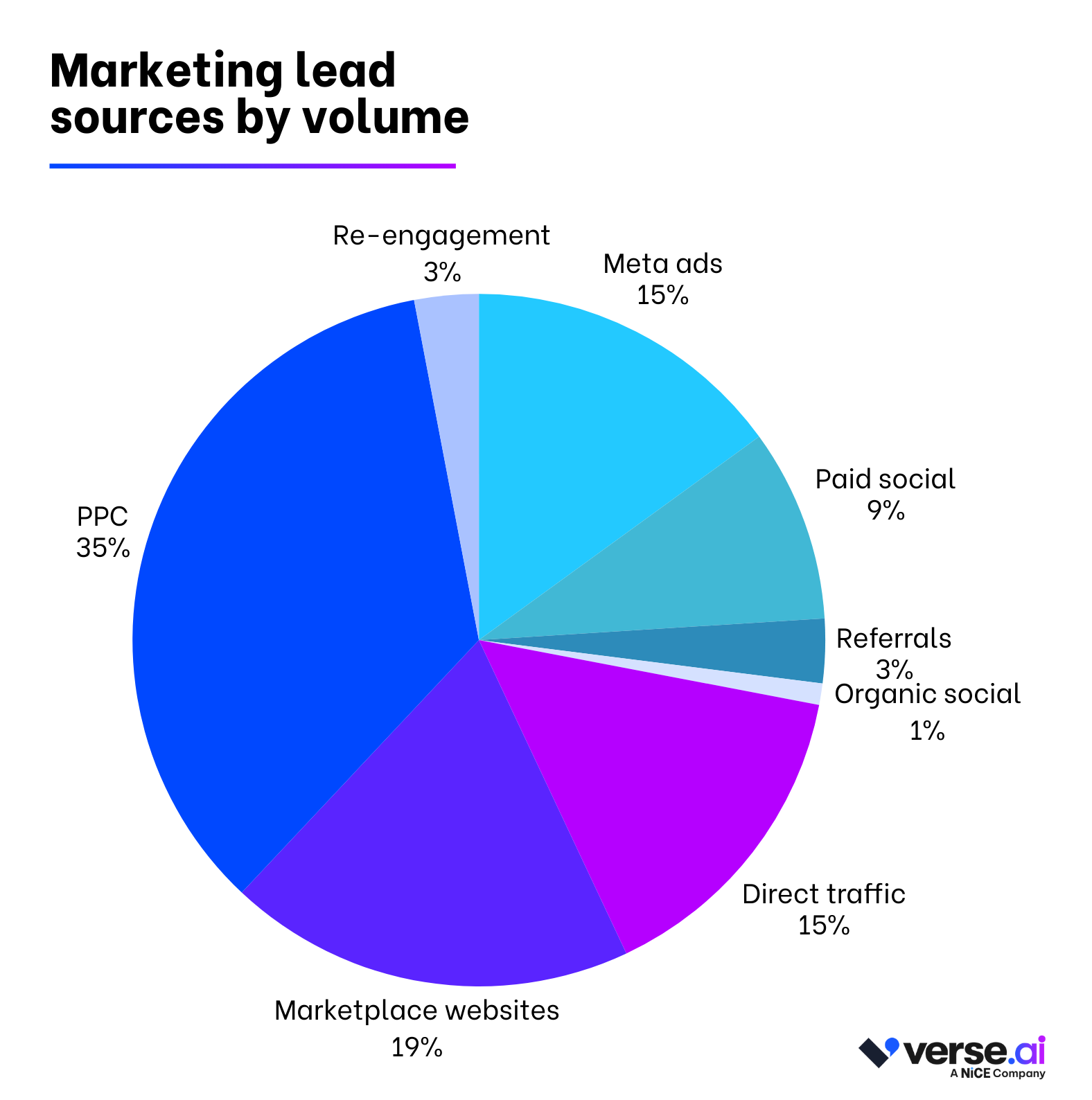
From this year’s leads handled by Verse, we took a sample of leads with lead source information to find the following data for each source:
- Lead volume: the percentage of the total leads sampled that came from each source
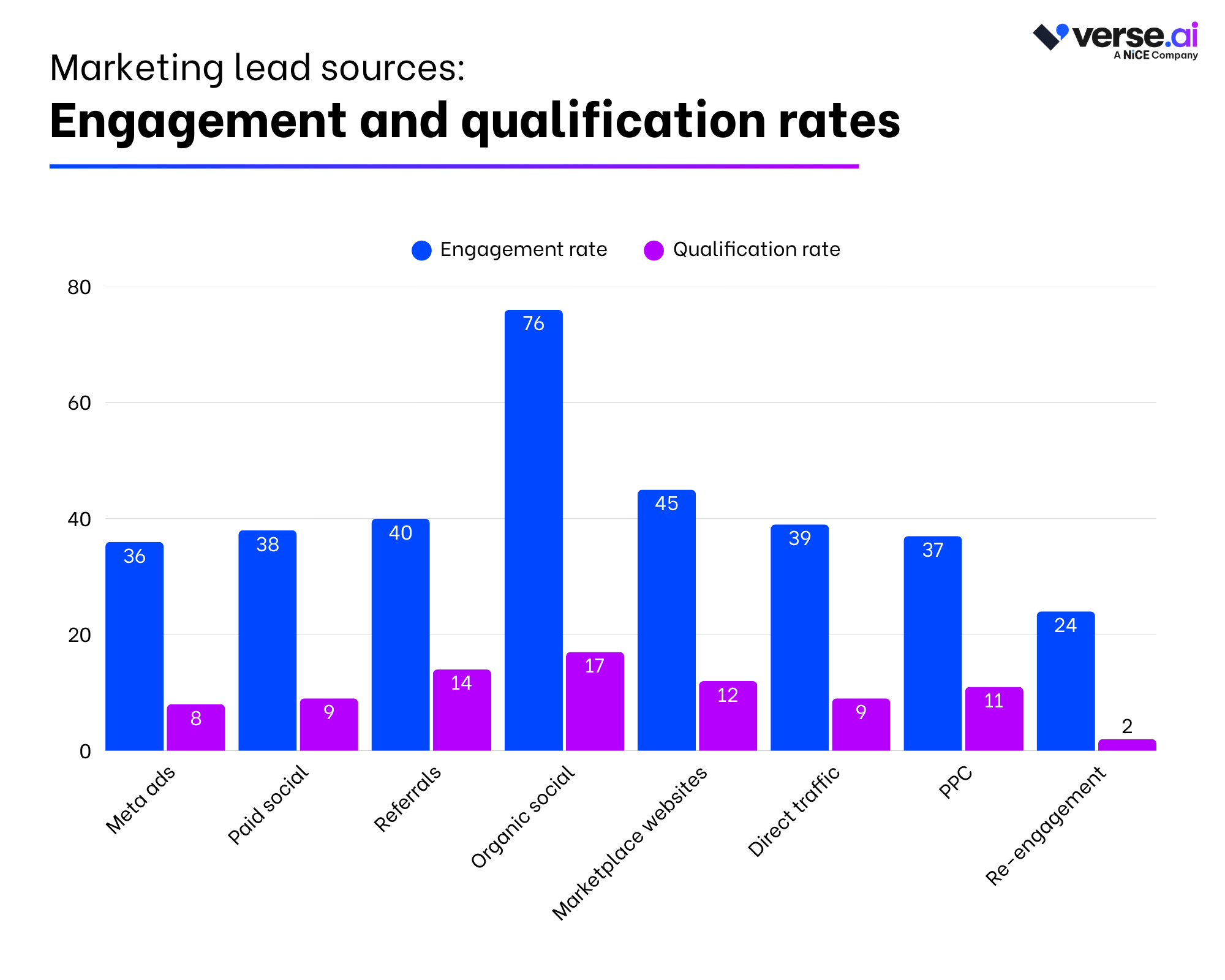
- Engagement rate: the reply rate for leads from each lead source
- Qualification rate: the percentage of leads that qualified from each lead source
In the following list, we’ve compiled the top seven sources based on these metrics.
7. Meta ads
Lead volume: 15% of total
Engagement rate: 36%
Qualification rate: 8%
As opposed to the wide umbrella of paid social, Meta ads are specifically for Facebook and Instagram. Meta ads are a huge lead generation engine for B2C companies. These are paid ads displayed on Facebook and Instagram to reach specific audiences based on demographics and interests. With Meta ads, marketing teams can set objectives and budgets, and can promote products or specific posts directly onto potential customers’ feeds.
In our list, Meta ads comes in at rank number seven. According to our data, it’s a well-rounded source: good volume, decent engagement rate, and slightly higher-than-average qualification rate. Though it depends on the content you promote, Meta ads tend to be a very safe choice for B2C marketing teams, helping you get your brand in front of your target audience.
6. Paid social
Lead volume: 9% of total
Engagement rate: 38%
Qualification rate: 9%
Paid social media ads include ads run on any social media channel to reach a specific audience. As with Meta ads, brands pay to display their content, ads, or posts to social media users based on demographic or behavioral data. Paid ads will show up on users’ feeds as sponsored content.
Widening out to all paid social ads, we see a slight uptick in both engagement and qualification rate, while lead volume is slightly lower. The 1% higher qualification rate just barely puts it ahead of Meta ads; but, if volume is your goal, Meta ads might be better. With paid social, the most effective social media channel for you can depend heavily on the type of content you are promoting.
For example, a candy brand will probably do best on TikTok, where eye-catching videos of the candy will fit right in with users’ feeds. For a B2B brand, LinkedIn likely would be the better choice to get in front of busy professionals with work on their mind.
5. Referrals
Lead volume: 2.5% of total
Engagement rate: 40%
Qualification rate: 14%
Referrals generate leads when your existing customers recommend your brand to people they know. These leads tend to be warmer and convert better since they’ve already been recommended.
Leads generated from reviews are also referrals—and reviews are more important than ever. 93% of people read online reviews before making a purchase.
As you can see from the data above, referrals both engage and qualify at a comparatively high rate. However, referrals are difficult to generate, so the volume is relatively low. While referrals tend to convert well, generating them naturally takes time.
4. Organic social media
Lead volume: 1% of total
Engagement rate: 76%
Qualification rate: 17%
Social media is a powerful lead generation tool—not just for ads, but for organic content as well. Organic social media leads are generated through non-sponsored brand content and social media interactions with users.
Organic social media leads are valuable because they likely have genuine interest in your brand. As the popularity of social media only increases, building relationships with these leads on social channels improves the likelihood of conversion.
In terms of quality, organic social media leads are excellent. However, the data indicates that these leads aren’t easy to obtain with a low volume. However, their engagement rate is very high, and qualification rate is certainly higher than average.
3. Marketplace websites
Lead volume: 19% of total
Engagement rate: 45%
Qualification rate: 12%
Marketplace websites generate high-intent leads for businesses by allowing users to browse, comparison shop, request quotes, and submit information to learn more about a product or service. When a lead fills out a form on the marketplace website, the vendor can then follow up. For example, Zillow is a marketplace website where users can schedule home tours.
Businesses must pay marketplace websites for these high-intent leads. However, we can see from the data that these leads are highly engaged and likely to qualify, especially compared to other sources. While these leads are valuable, they are definitely more costly than other lead sources.
2. Website traffic
Lead volume: 15% of total
Engagement rate: 39%
Qualification rate: 9%
Website traffic is a combination of both direct and organic traffic to your website.
Direct traffic is when someone comes to your site from an unknown source, like if they typed the URL in directly. Organic search traffic is a vital marketing lead source and is more trackable, generating leads by attracting users to your website through organic search.
Website lead generation includes search engine optimization (SEO). This works by optimizing your website for relevant keywords for search engines like Google or Bing so your website shows in top results. When people are looking for products or services on search engines, SEO helps your website show up in search engine results pages (SERPs).
In our data, we can see that website traffic is an excellent, well-rounded lead source. It has good volume, average engagement, and higher-than-average qualification. As far as cost per lead, these leads are very cost-effective as organic traffic only requires website optimization and SEO, with an average cost around $30 per lead—which puts it ahead of other lead sources.
1. Google Pay-Per-Click (PPC)
Lead volume: 35% of total
Engagement rate: 37%
Qualification rate: 11%
Pay-per-click (PPC) ads run through Google and generate leads by putting your website at the top of search results so users can click through to fill out a form. Brands must pay per click, meaning that each click costs a dollar amount. These ads work extremely well because they target users searching for queries that are relevant to your product or service.
PPC ads are displayed to specific audiences, which are more likely to have intent and interest, making them higher quality leads. As opposed to organic search, which requires time and effort, PPC generates high-quality leads right away.
In terms of volume, PPC is on top of this list. Engagement hovers around average, while qualification rate is slightly higher than average. PPC is a high-ROI, trackable, scalable lead source that generates good quality marketing leads.
Honorable mention: Re-engagement campaigns
Lead volume: 3% of total
Engagement rate: 24%
Qualification rate: 2%
Re-engagement campaigns target leads that you’ve already generated, but never converted into sales. Through targeted re-engagement, brands can win back leads that they already generated at zero cost.
Though engagement rates are lower than net-new leads, these leads earn an honorable mention on this list because they are extremely cost-effective—they’re essentially free. Re-engagement can result in qualified leads that close without investing any additional resources.
How we got these numbers
For further clarification on methodology, the data that you see above was taken from a random sample of over 80,000 leads handled by Verse this year. Verse does not generate leads for clients, but engage leads provided to us by our clients.
We used lead source data in order to ascertain the sources for these leads and calculate average engagement and qualification rates for these sources.
It’s worth mentioning that Verse is an SMS-first lead outreach platform, meaning that the majority of these leads are contacted (and oftentimes, even qualified) via text. For this reason, our engagement rates are much higher than if leads were strictly contacted via email or phone call.
As far as qualification rates, leads are qualified by Verse based on client-specific criteria. For example, many mortgage clients qualify leads based on budget, credit score, and urgency.

How to identify the best marketing lead sources for your business
Like candy businesses work differently than B2B tech, different businesses will do better with different sources.
Though this list includes data and benchmarks to help guide your approach to marketing lead sources, the best lead source for you depends on your specific business and your ICP.
Identify the best marketing lead sources for your business by following best practices, including:
- House data in a customer relationship management platform (CRM) to track lead generation, behavior, and source information.
- Use UTM (urchin tracking modules) codes in urls to your website to track where your leads are coming from.
- Track lead sources for engagement, qualification, and close rates.
- Label specifically—for example, don’t lump all social media leads together. Segment by social media channel and paid vs. organic.
- Understand cost-per-lead by tracking lead volume and cost per source.
- Use lead source data to measure value such as close rate and cost-per-lead to understand where you’re getting the most bang for your buck.
- Experiment with different sources; you won’t know what works or doesn’t without trying.
- Align between marketing and sales on lead quality—make sure that sales is actively participating in conversations about lead sources and quality.
Convert and track leads from every source
Verse is your partner for lead management, engagement, and conversion.
We take leads from any source and maximize your conversion chances with text outreach, in 90 seconds or less, for every single lead.
Our SMS-first platform manages millions of leads for our customers on a weekly basis, and includes lead source tracking to help our clients understand exactly what’s working and what’s not.
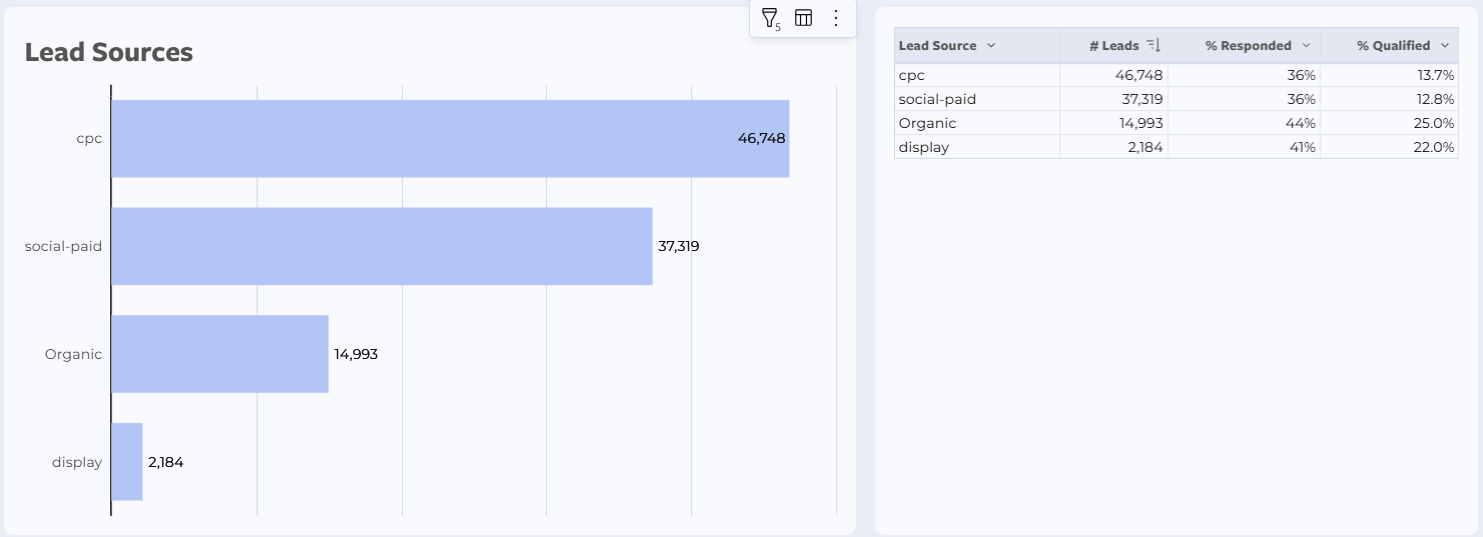
Our business insights dashboard gives marketing teams granular insights into where high-quality leads are coming from, when leads are coming in, and so much more.
Learn more about Verse by booking a demo today or checking out our self-serve demo center.
Marketing lead source data: Key takeaways