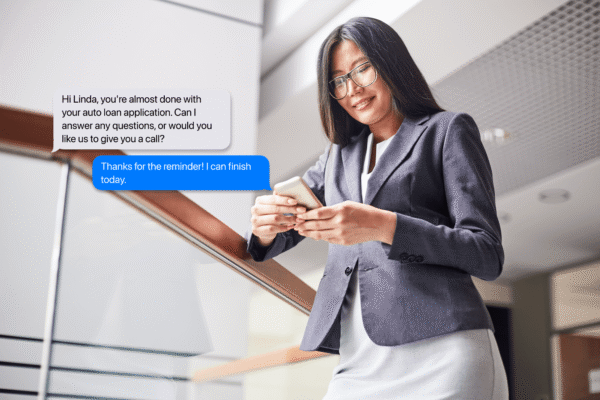


Research shows that people check their phones over 200 times a day. It’s time for brands to meet people where they are with personalized, one-on-one communication through texting.
Why? People are drawn to instant gratification—it’s human nature. With the advent of smartphones, social media, and rapidly-advancing technology, people’s expectation for instant gratification only grows.
Today, you can find the best way to do literally anything instantly with a Google search, ask ChatGPT for personalized, contextual answers, order whatever you need on Amazon and have it delivered as soon as that same day—the list goes on.
It’s an ever-evolving world we live in, but brands absolutely must keep up, or risk getting left behind. If people are expecting instant gratification, faster responses, and frictionless experiences, brands should deliver. That’s why texting is one big piece of modern brand communication that actually resonates with customers.
In this blog, we’re breaking down business texting psychology, proving why business texting works so well, and examining research-based methods to improve SMS effectiveness.
What is business texting?
Business texting is simply when a brand uses text messaging to interact with customers or prospective customers. For brands, texting is quickly growing in popularity due to its effectiveness:
- 98% of texts are read, compared to only 26-30% of emails.
- 90% of SMS messages are read within three minutes of delivery.
- 77% of consumers are likely to have a positive opinion of a brand that offers text capability.
According to a 2026 study of 2,442 American adults, 85% of them use phone messaging apps multiple times per week. Texting is the leading channel across every generation and gender group (yes, even for Baby Boomers and the Silent Generation).

Texting actually continues to grow, with three in 10 respondents saying they are messaging more than they were in the previous year. Seven in 10 say that messaging has replaced some or most of the phone calls they used to have.
It’s clear that texting is one of the best channels for customer communication and engagement—this is due to many factors, including psychology. Let’s explore why business texting works so well and how understanding psychological nuances can help you boost SMS engagement.
Why it works: Psychology of business texting
From likes, comments, direct messages, and delivery notifications, to texts—notifications have hijacked our brains’ dopamine response. For better or worse, it’s part of what makes both phones (and texting) so addictive.
According to Consumer Affairs, people look at their phones 205 times a day on average—which means texting is the easiest way to get in touch with the vast majority. The same study revealed that almost 57% of Americans self-identified as being addicted to their phones.

Notifications trigger dopamine signals in the brain, sending a reward response, and whether we’re conscious of it or not, it makes us more likely to check texts. For many people, the ping of a text message creates a sense of urgency that drives action—reading, replying, clicking, etc.
Texting also capitalizes on the Zeigarnik Effect, which drives people to remember and complete unfinished tasks. Unlike emails, texting is so ingrained in our habits and everyday lives as important, so when we receive texts, it’s exponentially more likely that we’ll engage with it.
From a psychological standpoint, texting is associated as a one-to-one, personal, and low-commitment. The majority of the texts we send and receive are to people we know, so when a brand reaches out via text, it feels personal and trustworthy.
Unlike a phone call, it’s not disrupting our space—texts leave a message there, with no commitment from the recipient. It’s in a personal space of our minds, without being invasive. Texts are only there if you want to engage.
Phone calls, on the other hand, ask something from the recipient. Phone calls are often unanswered because they can take time and energy, and even drive anxiety. If someone does want to engage with your brand, get questions answered, and move forward, text is a great place to do that, because it gives them the one-on-one, low-pressure, comfortable space to have a conversation. Having these conversations builds relationships in a way that other channels don’t.
Psychology tips to write better texts
Texting itself takes advantage of a few factors in order to incite action:
- Reward response: texts trigger a sense of urgency and delight
- Habits: showing up in phone notifications, where people habitually check
- Disruption: replying to texts can feel like an unfinished task—or remind you of one
- Implicit trust: because text is a personal channel, people have a stronger degree of trust
Recipients can also be persuaded by the content of the text message. Research by Dr. Robert Cialdini uncovered the seven principles of persuasion:
- Reciprocity: giving people something before asking them to do anything
- Scarcity: essentially, fear of missing out, or exclusivity
- Authority: believing in experts
- Consistency: looking for consistency in actions (in yourself and others)
- Liking: being more easily persuaded by people you like
- Social proof: trusting the actions and results of others
- Unity: desiring to be part of a community

Depending on your brand and use case, there are many ways to leverage these principles. For example, offering a discount before asking people to make a purchase, showing reciprocity, or putting on limited-time or limited-stock offers to trigger scarcity.
Let’s go over a few more proven ways to boost text message engagement by catering to your audience in ways they’ll actually care about.
8 ways to boost SMS engagement
We understand the psychological and behavioral trends that make texting so effective. Using that information, here are 8 concrete strategies to increase engagement.
Use two-way messaging
Going back to what makes SMS special: it’s personal, it’s one-to-one, and it’s an excellent way to build relationships—but that only happens if you’re using texting conversationally.
Two-way messaging is absolutely essential to increasing engagement and really creating a better customer experience. If people can’t reply, how will the connection be made?
This also goes back to the 7 principles of persuasion we covered earlier: one of them being likeability.
If you want your brand to be likeable, you should be available. Brands need to listen—not just talk. Customers want to be talked with, not at. People are much more willing to buy from a brand that creates a personal connection, and that doesn’t happen through one-way marketing blasts. It happens through two-way conversations that keep the customer engaged and top-of-mind.
So if you don’t have a two-way messaging capability, that’s definitely something to change that will increase the effectiveness of your campaigns.
Human and authentic voice
Of course, a pillar of likeability is being both human and authentic. Avoid being robotic and overly sales-y in your text outreach.
Interesting fact: Verse research has found that in the first outgoing text, double texting is far more effective than texting once. Why? Because one text gets all the compliance and identification out of the way, while the second one sounds like it actually came from a human.
Another tip: keep messages brief and to-the-point. No one likes a long text message (and certainly not one from a brand).
Drive the conversation
By asking questions and following up at appropriate times, you can drive text conversations. This also contributes to reciprocity, because you’re putting the effort in to connect.
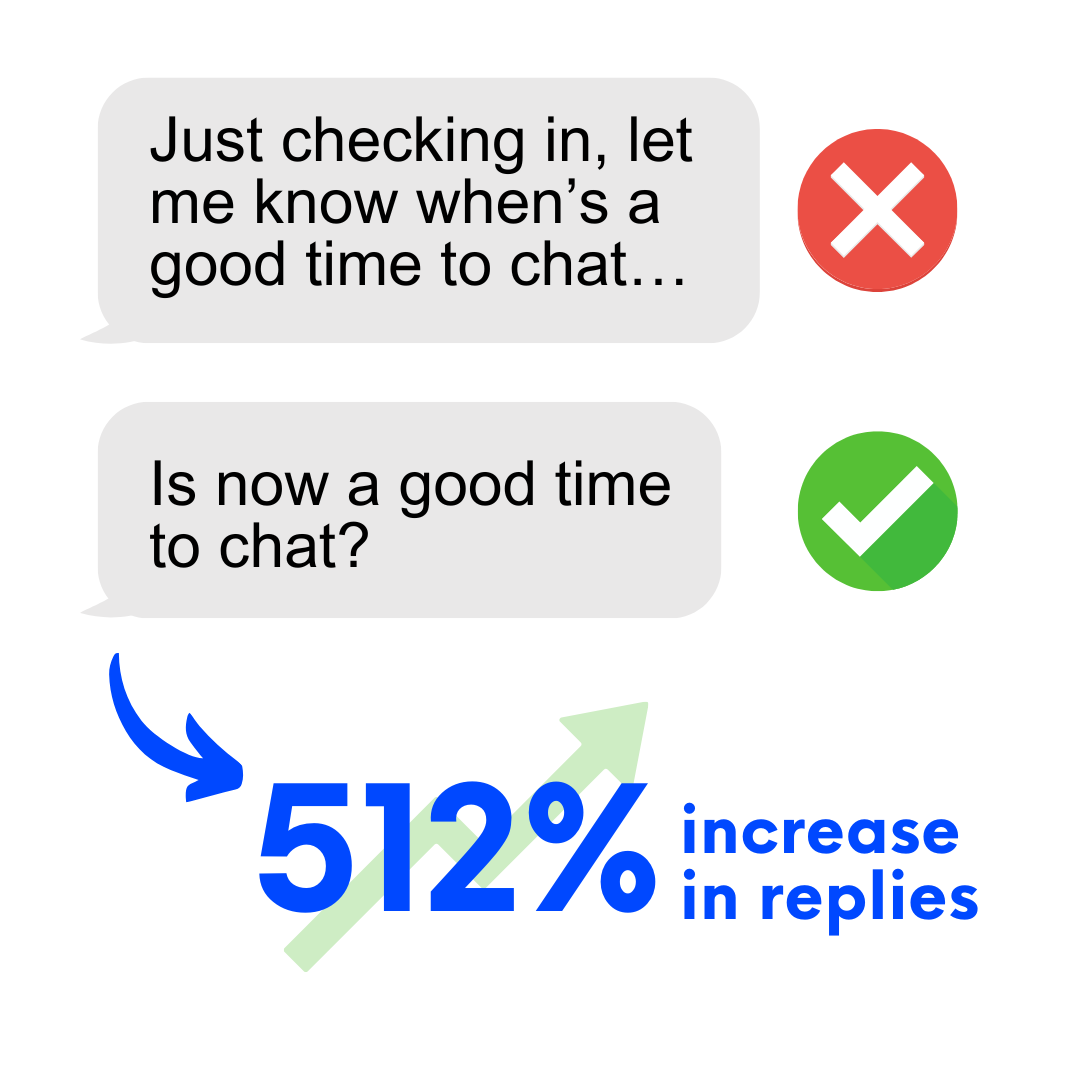
Asking questions can trigger the Zeigarnik Effect, making it more likely that people will remember to reply to your outreach. Our research shows that it’s better to answer questions rather than leave things open-ended; in fact, in the example below, the question outperformed the “check in” by 5x.
Fear of missing out (FOMO)
Scarcity is directly tied to fear of missing out (FOMO), i.e. fearing that there’s not enough for everyone. In promotional outreach, you can encourage faster action with expiring offers, coupons with deadlines, and time-sensitive language.
Because SMS is so immediate, it’s the perfect channel for this type of offer.
Research shows that people like promotional texts. According to Martech.org, 75% of consumers prefer to receive promotional content via SMS.
Trigger the Zeigarnik effect
The Zeigarnik effect refers to the mental burden of unfinished tasks, leading to stronger memory of those tasks. In order to keep motivated customers moving through the journey, rather than getting distracted and falling out of the funnel, we want to trigger this effect.
Sending texts at the right time can be the difference between a converted lead and a lost lead, reminding them to take action. For example, sending abandoned cart reminders via text can increase conversion rates by up to 20%.
Use cases for business SMS extend far beyond just conversion. Text is an excellent, non-intrusive way to:
- Confirm and remind people of upcoming appointments
- Nudge people to complete an unfinished application
- Remind people to register for upcoming events
- Follow up and convert people who never replied
- Send payment or invoice reminders
- Reduce cart or form abandonment

Create interactive text experiences
Interactive and visual experiences are key drivers of emotions and behavior, which can translate to higher click-through rates and conversion. For a business SMS strategy, this means that including visual or interactive elements at the right time is a good move.
RCS (rich communication services) are the best way to improve interactivity and visual media within text conversations, providing crisp images and videos, business contact cards and verification, and quick reply buttons. Not only does it make it easy to reply and show images of your products and services, it increases trust and brand identification through a branded business profile, which is visible within the texting app.
Use visuals that make sense with your message in order to drive action. Here are some examples:
- Including RCS pictures or videos to help answer questions
- Using an emoji in an opening text that makes sense with your business
- Allowing interactive reply buttons to quickly book a meeting or appointment
Tailor messaging
Craft messaging with psychology in mind to ensure it resonates with your audience.
Going back to the seven principles of persuasion, consistency is a pillar that you can use for writing texts. For one, people want to be consistent in what they say and do—so remind them that they previously expressed interest. Reminding them of their own actions can validate your message and increase the likelihood of response by triggering the urge for consistency.
To further personalize the message, showing care, you can reference:
- Where they submitted an inquiry (your website, a comparison website, an event, etc.)
- Their name
- The type of products/services they were interested in
- Previous purchases, if applicable
Consistency is also important within your brand; it’s something consumers expect across channels and across their personal experiences. Align messaging across marketing channels and within omnichannel outreach to each person—for example, emails referencing texts that were sent, sending the same offer across channels, etc.
Time messages well
Timing is one key to boosting engagement, and this also connects back to understanding your audience. You can use data and testing to find the best times to send texts, trying different parts of the day until you find the one with the highest engagement rate.
In a general study by Verse, we found that the best time to text leads was 9am-11am.
Here are a few other timing best practices:
- It’s always best to avoid early in the morning or late at night for both engagement and compliance.
- Adjust timing across time zones (if applicable).
- Don’t text more than 2-3 times per day unless the recipient is replying and it’s a conversation.
KPIs for texting success

The first step to boosting SMS engagement is tracking key performance indicators (KPIs).
To ensure that your strategy is actually influencing emotional behavior, driving action, and increasing reply rate, track metrics like:
- Response rate for each campaign: how often people respond to your texts
- Response rate by time of day: when people respond to your texts
- Conversion rate: how often people are taking the desired action
- Sentiment: how people feel about your message
- Re-engagement rate: how often a recipient re-engages with your messages or revisits your website
- Opt-out rate: how often people are choosing to end outreach
- Revenue generation: how often people who are contacted via text end up purchasing, and how much they spend
- Customer feedback: any information you can gather from customers about how they feel about SMS outreach
Ultimately, you want to craft campaigns that resonate with your audience and drive them to convert—and these indicate that things are working (or not working).
Examining this type of data helps you gain a better, unbiased understanding of text performance, and analyze the effectiveness of different campaigns, methods, and messaging strategies. Over time, you can benchmark, test, optimize, and improve your texting strategy based on these metrics.
Execute better, faster, and easier text campaigns with Verse
Verse is an AI-enabled business texting platform. We manage real-time, two-way text conversations for you at scale without any additional resources or investment.
Say goodbye to time spent on manual campaigns and strategy—Verse handles everything for you, from expert scripting to integration and implementation. Your team just receives warm, qualified leads that are ready to talk.
Verse includes:
- Custom scripting based on proven methodology
- 24/7/365 SMS response
- Compliance suite and guidance
- Human-in-the-loop oversight
- RCS capabilities
- Robust KPI dashboard
Meet customers where they are with two-way SMS. Book a demo with us to learn more, or check out our interactive demos here.
Psychology of business texting: Key takeaways