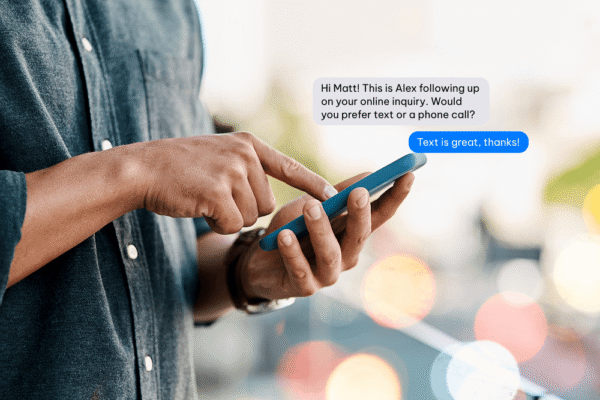
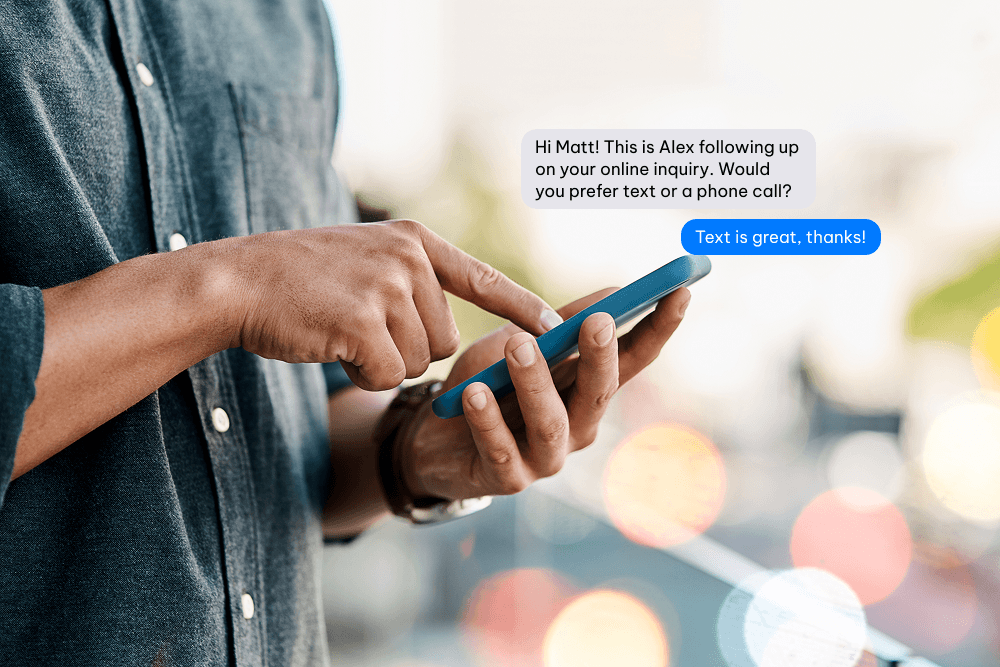
No matter who you are or where you work, we’re all consumers. For all of us, the customer experience and the buyer’s journey matter, because at the end of the day, it’s about our time and our mental energy. I don’t know about you, but I’m often running short on both.
That is the simple and most powerful reason why business SMS matters—and why it works so well—for consumers today. Across age groups, demographics, and income brackets, everyone wants a more convenient customer experience that caters to them.
This blog isn’t going to talk about 10 reasons why business SMS works (although we could easily do that). Instead, we’re going to focus on the one most powerful reason why businesses should text customers: because people want it.
Business texting meets customers where they are, when they are ready. That’s exactly why it works. They don’t want to call, they want to text. That’s why SMS engagement rates are so high. All over social media, people are talking about this, but brands aren’t listening.
View this post on Instagram
People want snappy answers, quick solutions, and immediate service. Because at the end of the day, no matter what you sell, the most important thing a brand provides is whatever the customers want.
What is business SMS?
Business SMS, or text messaging, is when a brand uses texting to engage with customers. It may include SMS marketing, but is not the same thing. Unlike SMS marketing, business SMS allows customers to be a part of the conversation. With two-way texting capabilities, it allows consumers to have real-time interactions with brands via text message.
Business SMS has a variety of use cases, including:
- Lead engagement and qualification
- Customer service and support
- Appointment scheduling, re-scheduling, and confirmation
- Promotional marketing and coupons
- Customer updates and notifications
Business texting statistics
When it comes to communication channels, texting has proven to be extremely effective. Here are a few key statistics:
- SMS has an average open rate of 98%.
- 78% of people wish they could have a text conversation with a business. (Local Project)
- Special offers sent via SMS are redeemed 10x more often than other types of offers. (Adobe)
- SMS campaigns achieve an average of 50% response rate (Verse)
- 77% of people are likely to have a positive opinion of a brand that offers texting. (Somos)
Why business texting works
Now, let’s discuss why texting works so well, even for brands.
Put simply, consumers are demanding faster, more convenient and efficient customer experiences that just make sense. Email inboxes are overflowing. Companies are slow to reply. Phone calls take up time and energy that people don’t have.
SMS is the answer, and not just because it drives business outcomes, but because it creates a better customer experience.
Death of the phone call
Phone calls are not the number one path to engagement anymore. Overwhelmingly, the majority of people don’t want to speak on the phone anymore. Especially not with brands; they don’t want to call a company, and definitely don’t want companies calling them.
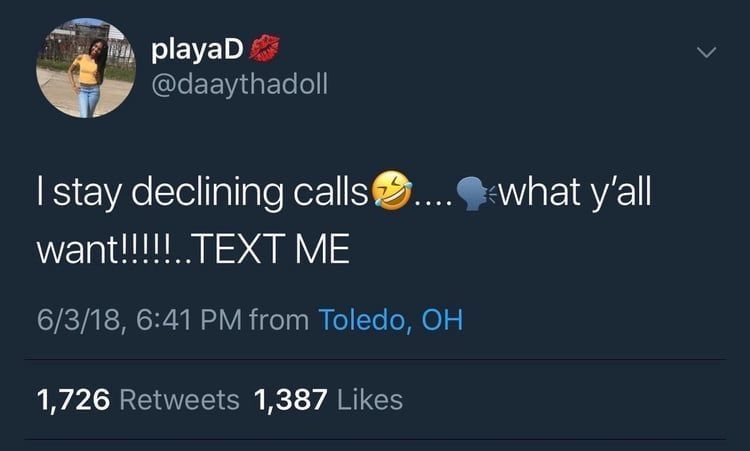
There’s no shortage of proof of this across social media. Brands that actually listen will be the ones to win the customer experience battle.
@bkharthun This could’ve been a text #textme #callme #dontcall ♬ original sound – Toon
Texting is for everyone
This is not just a trend among young consumers. Millennials, who have long been known to despise phone calls, are now in their 30s to 40s, but that still hasn’t changed. 75% of Millennials avoid phone calls, with 81% reporting that phone calls bring them anxiety. As their buying power increases, Millennials become an increasingly important generation for brands to please.
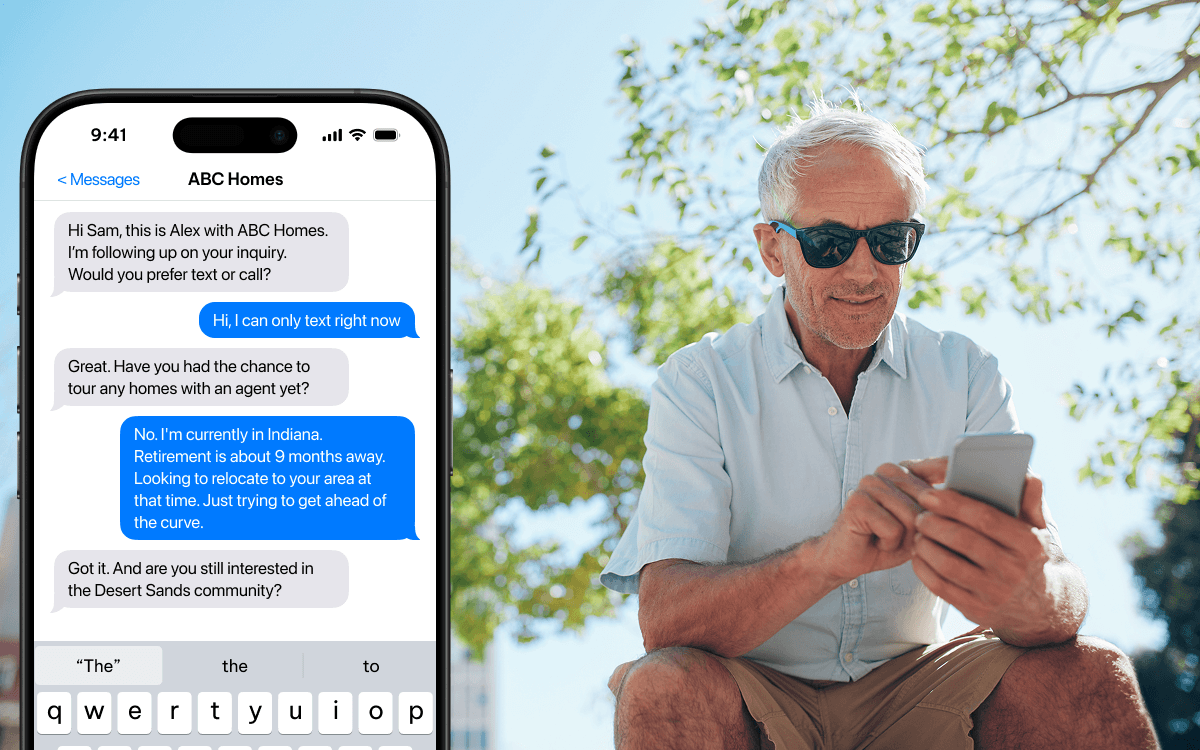
At the same time, Gen X is a huge adopter of texting. Recent data from AARP shows that most people over 50 years old actually prefer texting as their main way of communicating. Of adults aged 60+, 42% agree that texting is a convenient way to communicate with a business, and 57% would favor a company that offers texting. Even Boomers have adopted texting, with 94% of adults aged 70+ texting at least once a week.
Psychology of business texting
Unlike emails, texts elicit a psychological response that makes it much more likely that texts are not only read, but acted on. The immediate sensory elements of SMS—sight of a notification, alert sound, and vibration—contribute to a physiological response that can include anxiety, anticipation, or joy.
Texts are viewed as much more personal than email, yet at the same time, are a lower-commitment form of communication than a phone call—making it universally appealing.
“Text messaging seems to provide an opportunity for intimate personal contact while at the same time offering the detachment necessary to manage self-presentation and involvement.” – Fraser J.M. Reid and Donna J. Reid, from Text appeal: the psychology of SMS texting and its implications for the design of mobile phone interfaces (Source: Research Gate)
Business SMS vs. email case study
A real-world example from Colibri Group, a business connecting professionals to higher education, highlights the growing gap between SMS and email performance. Like many organizations, Colibri Group initially relied heavily on email to engage prospects, but found that it wasn’t always effective at reaching or converting them.
As Brandy Smith, Director of Marketing Operations at Colibri Group, explains:
“Email wasn’t always making it to a view or open. And SMS just really got a much higher engagement rate, and more responses, and is a better way to communicate with the individuals we’re working with. The SMS platform just really helped us meet our customers where they were at…connect with them when was best to.”
By adding SMS into their customer journey, Colibri Group connects with prospects in a more immediate and effective way. SMS allowed them to reach individuals when it was most convenient, leading to higher engagement, more responses, and more qualified conversations—ultimately helping their team convert more leads.
This case study reflects broader trends: while email still plays an important role, SMS is often the better channel for cutting through noise, providing real-time engagement, and meeting customers on their terms.
Best practices for business SMS
Now that we understand why and how business SMS works so well, let’s dive into a few best practices that ensure effective SMS campaigns.
Respectful SMS communication
The first rule of SMS includes respect for consumer preferences and SMS compliance. SMS compliance refers to the laws and regulations that govern business texting, and must be followed at all times.
Because SMS is an inherently more personal channel, it can quickly build trust, but that trust can easily be broken if brands fail to use proper opt-ins or opt-outs, text too frequently, or send irrelevant messages.
SMS requires a high level of consideration and respect, including:
- Respecting opt-ins: only text people who have properly opted-in, and always promptly process opt-outs.
- Personalizing messages: use key information provided by the consumer such as name and product/service or interest to affirm that the message is relevant.
- Not texting too frequently: unless the customer is actively replying, do not send more than three texts per day.
- Timing texts properly: send texts at the times people are most likely to engage, and do not text late at night or early in the morning.
- Keeping messages short: texting works great because the messages are brief and direct—don’t stretch the character count.
Two-way conversations
While promotional SMS marketing does boast high read rates, it’s often lacking the conversational element that most consumers want and expect.
For example, according to Twilio, 75% of consumers say they are sometimes or very often frustrated when they can’t respond directly to a brand’s message. The conversational, two-way capabilities of SMS are what makes it so great at relationship-building, and real-time SMS exchanges are what really creates connection with customers.
SMS without the ability to reply is not ideal, and can leave customers feeling neglected and annoyed.
Drive the conversation
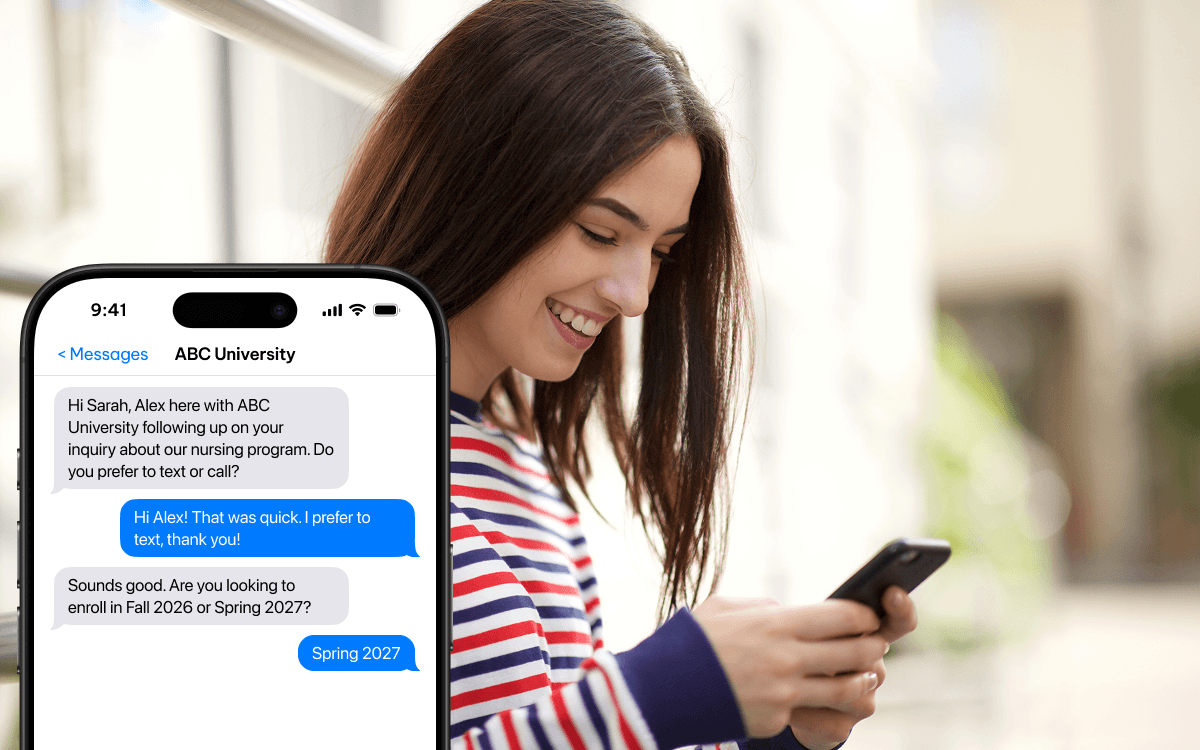
Of course, a key element of any successful campaign is messaging. With SMS, it’s important to move the conversation forward through direct, helpful messages that keep the experience convenient and quick for the consumer.
Here are a few tips on how to do that:
Each text you send should drive them towards action: providing necessary information, capitalizing on your latest offer, setting an appointment, or making a call (if necessary).
- For example, “Hi John! This is Alex from ABC Company. I wanted to let you know that we have an offer for 15% off services this month. Would you like to learn more?”
Avoid using open-ended messages and focus on questions that have a clear answer.
- For example, don’t say “Just checking in, let me know when you are free.” Instead, say: “When is a good time to chat?”
Keep texts human, authentic, friendly, and helpful.
- For example, “Hi John! Alex here with ABC Company. I’m following up on your request for more information. Is now a good time to chat?”
As an expert in business SMS, Verse helps clients with customized SMS messaging, as well as deliverability and conversion tracking, A/B testing, and more message optimization options.
Business SMS solutions and how to choose one
The next component of a great SMS strategy is the right technology. 80% of businesses use software to automate SMS.
In-house SMS presents a variety of issues, especially when each text is handled manually. These can include:
- Compliance risk
- Bandwidth constraints
- Limited ability to reply quickly
- Consistency in messaging
- Low visibility into conversations and deliverability as a whole
- Registering with carriers, including registration for A2P, CNAM, and Trust Scores
For this reason, most brands purchase business SMS solutions. These solutions, or platforms, allow businesses to send thousands of texts at scale with little manual work, using legitimate phone numbers and unified inboxes. The best platforms also include analytics for visibility into conversations, reply rates, etc.
Rather than having reps have one-off conversations with customers on individual devices, business SMS solutions provide visibility, control, and effortless scale for texting, so your team can experience the benefits of SMS without a huge workload.
Features to look for in business SMS solutions
When deciding on an SMS solution, you’ll ultimately want to match the features to your desired use case (for example, whether you’ll use texting for marketing, sales, or service). However, if your brand is ready to use texting across the customer journey, look for the following features.
SMS compliance features
SMS compliance includes laws like the TCPA, carrier rules, A2P registration, and state “mini” TCPAs (state laws that apply to texting anyone in the state). Non-compliance can quickly lead to fines, lawsuits, deliverability issues, and consumer distrust, so it’s essential that any SMS solution you choose helps with compliance. This means opt-in language, opt-out functionality, A2P registration, and deliverability monitoring.
SMS appointment scheduling
As SMS is so often used for appointment scheduling and reminders, any SMS solution should be capable of setting appointments. Making appointment scheduling easy by offering it via text increases appointments set; sending reminders via text reduces no-shows. The SMS platform should include the ability to send appointment scheduling links and integration with calendars and your CRM.
Live transfer
At Verse, we see great results with text-to-call workflows. For example, we see call answer rates of 92% when combining texting with calling. This is why live transfer functionality is so important—especially if you do phone appointments rather than in-person appointments. Live transfer allows you to seamlessly move the conversation from text to phone call when the customer is ready.
Analytics and CRM integration
Visibility into your SMS conversations, deliverability, and message performance is essential to improvement. The right SMS platform will have a unified dashboard with conversation history, which allows your team to see past messages and performance data at a glance, track engagement, and flag threads for follow-up. It should also provide analytics for texts sent, such as open rates, reply rates, opt-out rates, conversation sources, and conversion rates. Any data in your SMS platform should sync to your CRM through CRM integration as well.
AI SMS features
When implemented right, AI features can level-up SMS platforms by making your team available 24/7/365 while saving massive amounts of time.
Rather than replying to every text manually, AI SMS allows you to gather information, answer customer questions, set appointments, and qualify leads automatically. AI can process replies and reply in a human-sounding way using natural language processing and natural language understanding. When the conversation is ready to be transferred to a human, your team has the ability to take over the conversation at any time.
However, it’s paramount that any AI feature in customer-facing conversations is tightly controlled with what it can and cannot say to prevent misinformation and AI hallucination. At Verse, we use strict guardrails with our AI and use our human-in-the-loop system: if the AI cannot confidently reply, it goes through our team of human concierges for quality assurance in every conversation.
Business texting that delights customers
Ready to give customers what they want and start texting?
Verse is a fully-managed business SMS solution that allows your team to implement real-time, two-way texting at scale, right now, without any additional resources or investment.
Our AI-powered texting platform includes all of the features above and more:
- Custom scripting
- 24/7/365 SMS response
- Compliance suite and guidance
- Human-in-the-loop oversight
- Automatic lead qualification
- Robust business intelligence dashboard
Delight your customers with two-way SMS—and do it the right way. Book a demo with us to learn more, or check out our interactive demos here.
Key takeaways: Why business SMS works