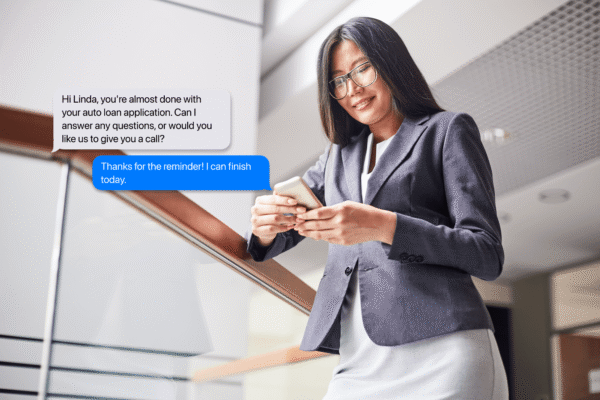



Most people have experienced the same type of text message from a brand. A short promotional blast appears on their phone announcing a sale, a discount code, or a limited-time offer. It arrives quickly, gets read almost immediately, and then disappears without any real interaction. Or, to put it simply: it reads and feels like spam. Conversational SMS is different.
SMS has always been powerful. Text messages are highly visible and difficult to ignore. Industry research shows SMS open rates around 98 percent, with 90 percent of recipients responding to messages within 30 minutes. For years, that visibility made SMS a reliable marketing channel.
But the way people communicate has changed. Customers no longer expect brands to simply send information. Instead, they expect a more active interaction. Texting is inherently conversational, so when brands treat it like a broadcast channel, the experience feels out of place.
This shift is driving the rise of conversational SMS. Instead of pushing one-way messages, brands are using SMS to create real conversations with customers. The result is a move from SMS marketing toward SMS customer engagement, where interaction and responsiveness matter as much as reach.
What is traditional SMS marketing?
Traditional SMS marketing follows a simple model. Brands send one-way messages to a large list of recipients, usually promoting an offer, alert, or announcement. The goal tends to be broad reach and maximum visibility.
Common examples include flash sale announcements, shipping notifications, and limited-time promotional codes. The structure mirrors other outbound marketing tactics where the brand pushes information, and the customer decides whether to respond through another channel.
The strength of this approach has always been immediacy. Text messages arrive instantly, and customers almost always see them, which makes this model of SMS marketing an effective tool for time-sensitive promotions, urgent notifications, and short-term campaigns.
The limitation, of course, is that the interaction usually stops there. Customers receive the message, but they rarely have a simple way to respond, ask a question, or continue the conversation. Put differently, the communication remains transactional rather than relational.
This gap is becoming more noticeable as consumer expectations evolve. Attention alone does not create engagement, but when engagement is what drives loyalty and conversion, you need more to be successful.

What is conversational SMS?
Conversational SMS promotes SMS engagement and represents a different approach to mobile communication. Instead of sending static messages, brands create interactive conversations where customers can reply and receive meaningful responses in turn.
In other words, conversational SMS represents a different approach to mobile communication compared to the more traditional, blast-out approach. Instead of sending static messages, brands create interactive conversations where customers can reply and receive meaningful responses.
At the most basic level, this begins with two-way SMS marketing. Customers can respond to a message instead of passively receiving it. However, conversational messaging goes further by enabling the brand to continue the interaction with relevant, real-time replies to build entire, meaningful conversations.
Modern conversational platforms use artificial intelligence to support this process. AI systems can interpret incoming messages, answer common questions, guide customers toward decisions, and escalate conversations to human teams when necessary.
The key difference is that messaging becomes an ongoing dialogue rather than a one-time event. Customers are not simply recipients of information, and instead become active participants in the interaction. This shift, in turn, fundamentally changes the role of SMS in a company’s communication strategy from functioning as a notification channel to becoming a relationship channel.
SMS Marketing vs SMS engagement: A structural difference
The distinction between SMS engagement vs. SMS marketing becomes clear when looking at how each model operates.
Traditional SMS marketing relies on pre-planned broadcast campaigns. Messages are prewritten, sent to large audiences, and designed to drive immediate action, like a purchase or a website visit. Once the message is delivered, the interaction typically ends. The feedback loop, in other words, is limited beyond open and click rates.
Conversational engagement operates differently. Messaging adapts based on customer responses and behavior. Instead of a single campaign message, the interaction unfolds as a sequence of exchanges that guide the customer toward a goal. The result is a more responsive experience where customers can ask questions, clarify details, or request help, with the platform adapting to respond.
Most fundamentally, SMS marketing functions primarily as a channel, while conversational SMS functions as an experience. The technology remains the same, but the customer interaction becomes fundamentally different.
Why one-way SMS marketing is losing effectiveness
Customer communication expectations have changed significantly over the past decade. Messaging platforms like iMessage, WhatsApp, and other chat applications have conditioned people to expect immediate interaction when they send a text, and the recent proliferation of AI answer engines has only made that expectation of immediacy stronger.
This also means that an experience where brands send one-way messages without the ability to respond almost necessarily feels outdated. Customers instinctively view texting as a conversational channel, not a broadcast medium.
As a result, engagement starts to matter more than reach. High open rates do not necessarily translate into meaningful interaction, because audiences might be disappointed once they open a message and find a lack of interaction potential. Brands need customers to reply, ask questions, and take the next step in the buying or service journey.
The opportunity, then, lies in capturing those responses and turning them into conversations. Without that next step, SMS becomes another notification channel rather than a relationship-building tool.
Personalization also plays a growing role in customer communication. Generic promotional blasts increasingly feel irrelevant in an environment where consumers expect tailored experiences. Conversational messaging allows brands to adapt responses based on behavior, preferences, and past interactions.
Finally, customer experience has become a primary competitive factor across industries. According to research from PwC, a majority of consumers say the experience a company provides is as important as its products or services. Conversations create that experience in a way that one-way mass texting campaigns simply cannot.

The strategic benefits of shifting to conversational SMS engagement
Shifting from one-way messaging to SMS customer engagement results in a number of measurable business benefits:
- Conversion rates. When customers can ask questions and receive instant answers, decision-making becomes easier. Removing friction at critical moments often accelerates the purchase or commitment process.
- Relationship building. Dialogue feels human and responsive, even when supported by AI. Instead of receiving constant promotions, customers experience communication that adapts to their needs, creating a stronger relationship with the brands that interact with them.
- Data and insights. Every interaction generates data about the user, revealing important insights like intent signals that help companies understand what customers want, when they are ready to act, and what questions remain unresolved. Over time, conversational interactions create a much richer understanding of customer behavior.
- Always-on engagement. Instead of short campaign bursts or promotions, brands can maintain continuous dialogue across the entire customer lifecycle, available anytime customers want to reach out or interact.
Put it all together, and you begin to see how conversational SMS accelerates purchases and increases buying frequency.
Real-world scenarios: Where conversational SMS creates the most value
The practical applications of conversational messaging span several areas of customer interaction. One of the most common use cases is lead conversion.
When potential customers submit an inquiry or request information, a conversational SMS platform can respond immediately. The conversation can qualify the lead, answer initial questions, and route the opportunity to the appropriate sales representative.
Customer support is another natural fit. Many routine service questions can be handled through text-based conversations, which reduces call center demand while providing faster answers to your customers.
Conversational interactions can also be brought in to improve appointment scheduling and management. Customers can confirm appointments, request new times, or ask logistical questions without leaving the messaging thread.
Finally, sales teams increasingly use conversational SMS to guide buyers through decision processes. By recommending products or services based on customer responses, brands can create a personalized experience that feels more like assistance than promotional.
The future of SMS marketing is conversational
Conversational engagement is expanding rapidly, but traditional SMS marketing continues to play an important role. Broadcasting messages via text is still effective for awareness campaigns, promotions, and transactional alerts. The difference is how those messages are used within a broader communication strategy.
As we move toward a more conversational future, broadcast SMS messages can act as entry points into those conversations. For example, a promotional message may invite customers to reply with a question or request more information. Once the customer responds, the interaction becomes conversational rather than transactional.
This structure blends the strengths of both approaches. SMS marketing delivers reach and visibility, while conversational SMS delivers engagement and relationship building. The future of messaging, then, lies in combining these models rather than choosing between them.
Furthermore, advances in artificial intelligence are making large-scale conversational messaging possible for the first time. AI systems can interpret intent, generate relevant responses, and manage thousands of simultaneous interactions without delays. As a result, brands can provide real-time responses while maintaining consistency and accuracy, with human teams involved where complex conversations or sensitive decisions require personal attention.
Explore conversational SMS at scale
For many years, SMS marketing was defined by broadcast messages and promotional alerts. That visibility still matters, but it is no longer enough.
Conversational SMS looks to be (and has already become) the next stage of successful mobile messaging strategy. Enabling two-way communication and meaningful dialogue allows companies to move beyond simple notifications and begin building authentic relationships with their audiences.
In other words, conversational messaging is the natural evolution of mobile communication. But of course, creating responsive messaging experiences requires technology designed to support and enhance those conversations at scale. That’s where Verse.ai comes in.
The Verse platform enables organizations to deploy conversational SMS at scale through AI-powered messaging that responds instantly and adapts to customer interactions. Ready to get started? Learn how conversational messaging can transform your engagement strategy.