

A bank sends a loan appointment reminder. The customer has a question about the borrowing process, but the text says, “Do not reply.” Now they are forced to call if they want to ask a question—and might not even show up to that appointment.
This is an example of the vital flaw in one-way SMS. Two-way SMS, on the other hand, would allow the customer to reply, ask questions, and even reschedule if needed.
While both reach mobile phones with short messages, one-way is used to send text blasts; two-way SMS lets customers respond, self-serve, or ask for help.
For banks and credit unions, the right approach depends on the purpose of the message, its urgency, and the level of interaction required.
What is one-way SMS?
One-way SMS involves broadcasting outbound messages without the capability for replies. Customers can read the message but cannot continue the exchange through that number. The primary goal is to inform or alert.
Banks use one way SMS messages for branch closures, transaction notices, scheduled maintenance, and certain fraud alerts. A text message can also communicate an appointment time or announce upcoming events, such as a financial education webinar.
For example, an automated message reads: “Your lending appointment is tomorrow at 2 p.m. Call the number on our website to make changes.”
This form of one way messaging is straightforward to deploy. Banks can schedule messages, update customers at scale, and avoid staffing a queue for every notification. It typically has lower operational costs than a fully-staffed conversational program.
However, one way communication still requires oversight. Consent records, opt-out requests, delivery failures, and customer complaints do not disappear after setup. And if an alert triggers concern, customers need an obvious path to further assistance.
What is two-way SMS messaging?
Two-way SMS messaging allows a bank to send and receive messages in the same conversation. Customers can reply using natural language, while an automated system or staff member handles the response.
Consider an appointment reminder that says: “Hi Taylor, your mortgage consultation is Thursday at 11am. Reply YES to confirm or tell us another time that works.” They can confirm appointments or request a new slot conversationally—without switching channels.
This is two way text messaging built around action. The primary goal isn’t just to notify, but also to engage and support customers. When an exchange needs more context, conversational SMS can connect the customer to trained support teams or a secure banking channel.
AI-assisted conversational messaging provides immediate responses to routine questions, detects sentiment and intent, and escalates complex requests. AI-powered two-way SMS provides engaging, helpful conversations without requiring a banker to type every reply.
One-way vs two-way SMS: Key differences
| Consideration | One-way text alerts | Two-way SMS |
| Purpose | Inform, warn, or update | Engage, resolve, and guide |
| Reply experience | Read-only for normal conversation | Customers can respond and continue |
| Best bank uses | Branch notices, status updates, account alerts | Loan follow-up, appointment changes, service questions |
| Staffing and cost | Lower ongoing conversation workload | Reply handling, automation, and escalation required |
| Success metrics | Delivery, timely receipt, opt-outs | Response rates, completed actions, satisfaction |
One-way SMS suits clear notices. Two-way texting helps when customers need to answer, choose, or ask for help.
Why two-way texting changes customer engagement
Text reaches people quickly. That’s why SMS can be incredibly effective for timely updates. In EZ Texting’s 2026 survey of 959 U.S. consumers, 72% said they check business texts within five minutes, and 70% expected a business response within an hour.
SMS messages are also widely reported to have higher open rates than email. The FTC cites estimates as high as 98%, although standard SMS does not provide the same measurable open tracking as email. For banks, reply and action rates are more reliable indicators of a successful program.
A 2026 Kantar study commissioned by Meta found that 72.4% of surveyed consumers said they were more likely to purchase from brands offering messaging.
SMS is a huge opportunity, but the inability to reply can turn that advantage into frustration. Twilio research found that 75% of consumers experience frustration at least sometimes when they cannot respond directly to a brand’s message.
For a bank, the benefits of two way communication show up in meaningful conversations: fewer unanswered questions, quicker decisions, and stronger customer relationships. Personalized messaging that reflects customer preferences and past interactions makes those exchanges feel relevant on a personal level.

Where banks should use each approach
Fraud alerts and account notices
Urgent fraud alerts benefit from concise, recognizable SMS messaging. A one-way alert can direct a customer to the bank’s official app or a verified phone number. If a bank offers a two-way fraud workflow, replies should lead into authenticated processes rather than request passwords, PINs, or full account details by text.
Sensitive questions belong in a secure portal or other form of authenticated support. Routine status updates can remain one-way; worried customers need a safe escalation path.
Loan applications and lead follow-up
Retailers use abandoned cart reminders when shoppers leave without buying. Banks encounter a similar drop-off when prospective borrowers start an application and stop.
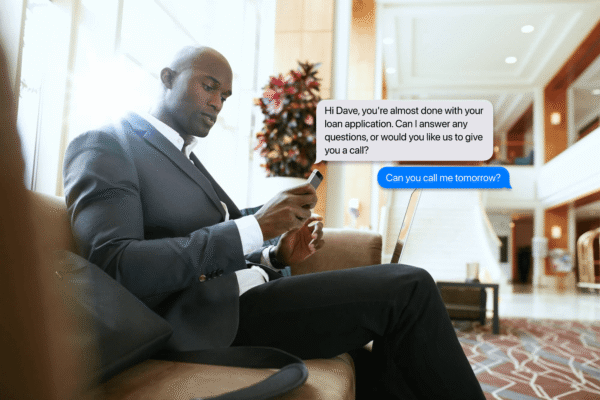
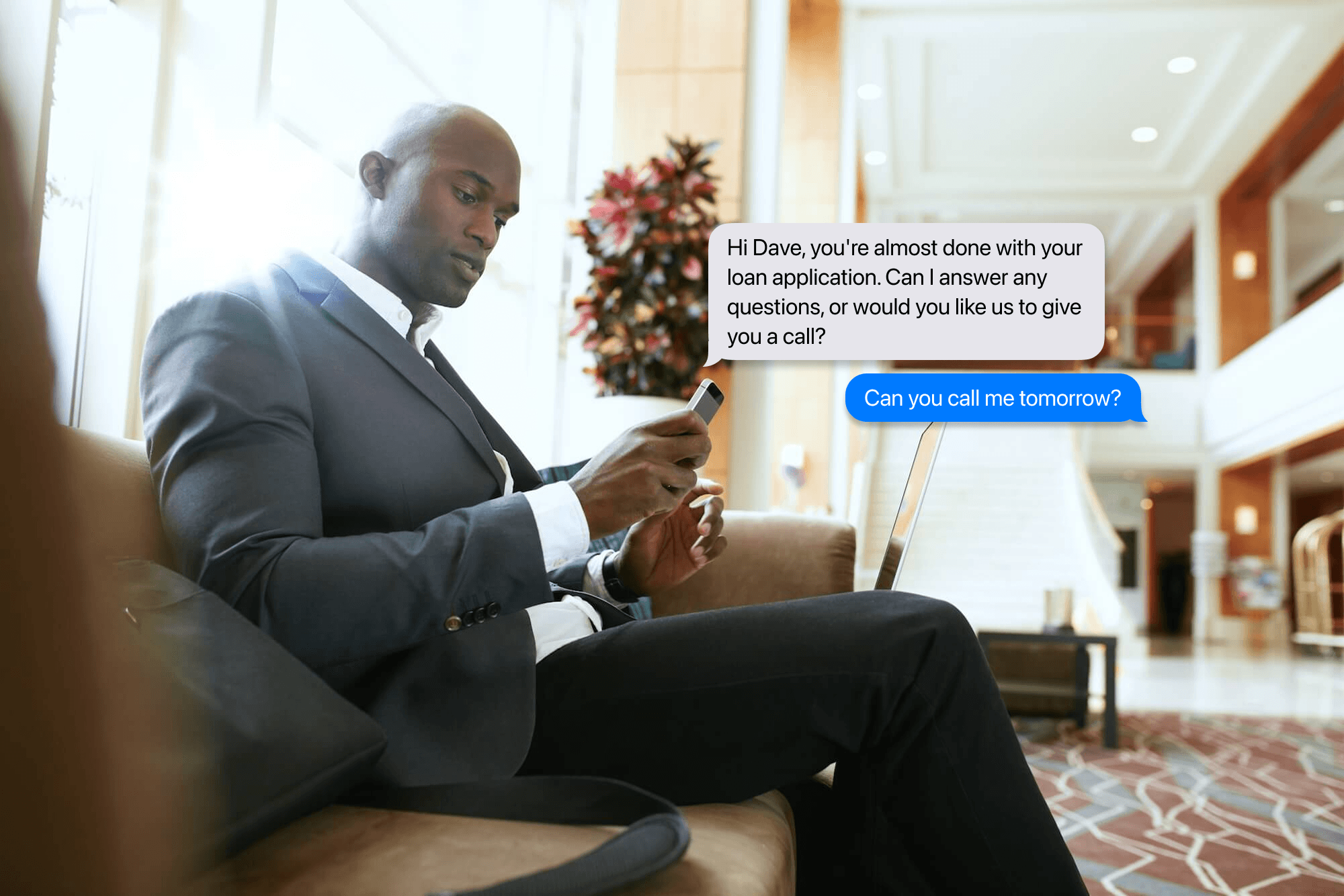
Here, traditional SMS marketing sends a generic reminder—but two-way SMS allows businesses to follow up with a useful question: “Are you still interested in discussing mortgage options?” A reply can trigger qualification, an advisor callback, or help completing the application.
That turns text message marketing into timely support and reaches more customers without repeated calls.
Appointments and service requests
One-way appointment reminders keep customers informed. But if a meeting conflicts with work, a read-only alert simply creates another task.
With two-way SMS, banks can invite customers to confirm appointments, request changes, and manage appointments within an ongoing conversation. An AI-assisted SMS service can offer available options and coordinate with a booking system, leaving advisors free to focus on conversations that require expertise.
Feedback and relevant offers
Two-way messaging can gather feedback after a branch visit or advisor call. A short question such as “Was your issue resolved today?” supports collecting feedback and alerts support teams when further assistance is needed.
For opt-in marketing campaigns, a bank can invite customers to discuss a savings goal or upcoming events. Unlike bulk SMS campaigns that send the same promotion to an entire SMS list, conversational messaging can tailor the next step to a customer’s response, which creates more engaging conversations and helps build loyalty.

Costs, compliance, and message frequency
One-way SMS generally costs less to operate because it does not require routine conversation handling. Two-way SMS adds technology, monitoring, and escalation responsibilities. Still, automated replies and better lead engagement can make it a cost-effective alternative to labor-intensive, traditional channels (such as phone calls for routine questions).
Compliance applies to both models. In the U.S., automated promotional texts generally require prior express written consent under the Telephone Consumer Protection Act; informational alerts follow different consent rules, and certain qualifying bank fraud alerts have exemptions. Keep a documented opt-in, honor opt-outs, and review state requirements with counsel.
An SMS messaging provider should support sender registration, consent records, STOP handling, and clear disclosures. One-way platforms that cannot accept replies must provide a working opt-out method. For subscribers on the Do Not Call registry (DNC), promotional messages face additional restrictions.
Frequency matters, too. Sending too many messages turns an essential tool into an interruption. Respect customer preferences, segment by need, and coordinate SMS with email, secure app notifications, and other channels. SMS marketing works when customers trust the sender and find the content useful.
Choosing the right SMS approach for your bank
Start with customer intent. If the business needs to announce a branch closure, one-way SMS is the right fit. If a borrower needs help scheduling a meeting, two-way SMS supports an immediate exchange.
Assess the workflow before choosing between SMS platforms. Can the bank receive replies, recognize the request, use appropriate automation, and escalate sensitive matters? Can its teams see relevant customer interactions without exposing confidential account details in a text thread?
To increase engagement, ask one useful question instead of repeatedly broadcasting offers. Then measure delivery, response rates, appointments, application completion, opt-outs, and satisfaction. Business messaging should improve customer satisfaction through useful service rather than simply sending text blasts.
Make banking conversations count with Verse
Many businesses still treat mobile marketing as a broadcast channel, even when a prospect is ready to talk.
Verse brings AI-powered two-way SMS to financial services with 24/7 lead engagement, qualification, appointment setting, and human handoff. Its approach combines conversational automation with controls designed for compliant business communication, helping banks reach customers promptly and turn questions into real conversations.
Ready to move beyond text alerts? Book a Verse demo to see how conversational SMS can support your customer experience and help turn more inquiries into appointments.
Frequently asked questions
What’s the difference between one-way and two-way SMS?
One-way SMS sends outbound messages that customers can’t reply to—its primary goal is to inform or alert. Two-way SMS lets customers reply, ask questions, and take action in the same conversation, so it’s built to engage and resolve.
When should a bank use one-way SMS?
Banks should use one-way SMS for clear notices that don’t need a response, such as branch closures, transaction notices, scheduled maintenance, and some fraud alerts. It’s simple to deploy and usually costs less to run, because no one has to handle replies.
When should a bank use two-way SMS?
Use two-way SMS when a customer needs to answer, choose, or ask for help. Common financial services examples are loan application follow-up, confirming or rescheduling appointments, service questions, and post-visit feedback.
Why does two-way texting improve customer engagement?
It removes the dead end of a “do not reply” message. In a Twilio study cited in the source blog, 75% of consumers said they’re at least sometimes frustrated when they can’t respond directly to a brand’s text.
Is SMS safe for bank fraud alerts?
A short, one-way alert that points customers to the bank’s official app or a verified phone number works well. If a bank offers a two-way fraud workflow, replies should lead into an authenticated process.
Does two-way SMS cost more than one-way SMS?
Usually—but it’s more cost-effective in the long run. Two-way SMS adds technology, monitoring, and escalation work, but automated replies and better lead engagement can make it more cost-effective than using human-monitored, labor-intensive channels like phone calls for routine questions.
What compliance rules apply to bank text messaging?
Both models need consent records, working opt-out handling, and clear disclosures. In the U.S., automated promotional texts generally require prior express written consent under the Telephone Consumer Protection Act. Informational alerts follow different consent rules, and certain qualifying bank fraud alerts are exempt. Promotional texts to numbers on the Do Not Call registry face extra restrictions. Review requirements, including state rules, with counsel.
How can AI help with two-way SMS for banks?
AI-powered SMS messaging can answer routine questions right away, detect sentiment and intent, and escalate complex requests to a person. It can also offer available appointment times and coordinate with a booking system, so advisors can focus on conversations that need their expertise.