



Let’s face it: no one wants to answer a collection call. However, consumers routinely use their phones for asynchronous experiences: to manage bills, appointments, purchases, and everyday financial decisions.
Shifting consumer behavior opens an opportunity for collections teams. SMS for collections gives businesses a direct, non-intrusive way to reach consumers, deliver timely payment reminders, and encourage engagement without relying exclusively on outbound calls.
But successful texting requires careful execution. Debt collectors must comply with complex regulations, safeguard consumer privacy, and communicate with empathy. A poorly timed or improperly worded message can damage relationships and expose organizations to legal risk.
Here’s how to build an SMS collections strategy that supports regulatory compliance, operational efficiency, and a better customer experience.
Why SMS is changing debt collection
Traditional collection methods rely heavily on phone calls and letters. These communication channels still serve important purposes, but they don’t always align with how consumers prefer to interact.
Text messages offer a less disruptive alternative. Recipients can read and respond when convenient, review payment options, and take action without committing to a live conversation.
For collections teams, the benefits include:
- Higher engagement potential: Mobile-first outreach offers another way to connect with consumers who don’t answer unfamiliar numbers.
- Faster responses: Two-way SMS messages make it easier to ask questions, request information, or arrange a callback.
- Greater convenience: Secure links give consumers access to account details and self-service payment tools.
- Improved operational efficiency: Automated workflows help agencies manage large outreach volumes while allowing human representatives to focus on complex cases.
The value extends beyond collecting money. When organizations communicate respectfully and offer consumers more control, they create better conditions for building trust.

SMS debt collection compliance: What you need to know
Sending text messages about an outstanding balance involves more than selecting recipients and writing a collection text. Federal and state consumer protection laws establish rules governing when, how, and why collectors can contact individuals.
Three regulatory frameworks deserve particular attention.
1. The Fair Debt Collection Practices Act and Regulation F
The Fair Debt Collection Practices Act (FDCPA), implemented through Regulation F (Reg F), establishes standards for covered third-party debt collection activities.
Under these rules, debt collectors must:
- Identify the communication as an attempt to collect a debt, with the required disclosure in the first communication and appropriate identification in subsequent communications.
- Provide a clear, simple way to submit opt out requests for electronic outreach.
- Avoid contacting consumers at inconvenient times. Generally, communications before 8 a.m. or after 9 p.m. in the consumer’s local time zone are presumed inconvenient.
- Protect sensitive financial information from unauthorized third-party disclosures.
- Honor applicable requests to stop using particular communication channels.
A consumer can opt out of future texts by replying STOP. Regulation F requires an appropriate opt-out notice in each covered electronic communication, and collectors cannot impose a fee to exercise that right.
These requirements apply alongside rules governing debt validation notices and consumers’ rights to dispute an obligation.
2. The Telephone Consumer Protection Act
The Telephone Consumer Protection Act (TCPA) governs certain calls and text messages, particularly those sent using regulated automated technologies.
Depending on the technology and circumstances, debt collectors need the appropriate prior consent before contacting a consumer. Teams should document consent, identify how permission was obtained, and verify that the intended recipient still owns the phone number.
TCPA violations carry substantial financial exposure, reaching $500 per violation or up to $1,500 for a willful or knowing violation—and across campaigns, stacked violations can cost millions of dollars quickly.
Because requirements vary based on the messaging technology, consent history, and applicable state laws, organizations should review their outreach practices with qualified legal counsel.
3. Privacy, verification, and recordkeeping
A text sent to the wrong number can reveal sensitive information to someone who has no connection to the account.
Regulation F establishes procedures to reduce unauthorized disclosures, including checking for reassigned phone numbers when relying on specified text-messaging procedures.
Secure systems should also retain relevant consent records, message histories, and opt-out logs.
Under Regulation F, covered collectors generally must preserve records evidencing compliance or noncompliance until three years after their last collection activity on a debt.
A well-documented compliance process protects both consumers and the organizations serving them.
6 best practices for effective collection text messaging
Regulatory requirements establish the boundaries. The right messaging strategy determines whether consumers respond positively.
1. Send messages at optimal times
Timing influences engagement rates. Although the general federal restriction for covered collectors is 8 a.m. to 9 p.m. local time, business hours provide a sensible starting point.
For upcoming obligations, consider sending payment reminders five days before the due date. A second reminder closer to the deadline can help consumers avoid late fees, provided the frequency is appropriate and legally permitted.
Monitor response patterns and adjust outreach based on consumer preferences rather than sending repeated notifications.
2. Keep every message concise and professional
Effective SMS messages communicate a clear purpose without overwhelming recipients. To comply with federal regulations, third-party debt collectors must state that each text after the first is from a debt collector. (Source: (12 CFR 1006.18(e)(2))
Aim for under 320 characters when practical, recognizing that required disclosures sometimes demand additional space. Avoid aggressive language, exaggerated urgency, or threats of further action.
A straightforward message should identify the sender, explain the next step, and provide a convenient way to respond.
3. Personalize without compromising privacy
Personalized messages help consumers recognize that a notification is relevant to them. However, including detailed debt information in an unsecured text creates unnecessary risk.
Use approved personalization fields and direct recipients to a secure portal to verify their identity before revealing sensitive details.
Once authenticated, consumers can review the original creditor, confirm the amount owed, access supporting documents, or discuss available repayment arrangements.
4. Make payment simple
A collection SMS should create a convenient path toward resolution.
Where appropriate, include a secure, recognizable link that allows consumers to review an outstanding balance, explore payment options, or complete a transaction.
Never request full credit card details or other sensitive financial data through an unsecured text conversation.
5. Enable two-way communication
One-way notifications limit the usefulness of texting. Consumers need opportunities to ask questions, request assistance, and communicate their circumstances.
For instance, someone who cannot pay immediately may want to discuss alternative arrangements. Another individual may need to dispute the debt or request verification.
Automated systems should recognize these situations and direct the conversation to the appropriate workflow or representative.
6. Measure performance and respect preferences
A successful collections strategy requires more than tracking the number of messages sent.
Monitor delivery rates, responses, payment conversions, opt-outs, and spam complaints. These metrics help identify opportunities to enhance efficiency without sacrificing the consumer experience.
A centralized system can also manage communication preferences across channels, reducing unwanted follow-ups and maintaining accurate records.
Example collection text message templates
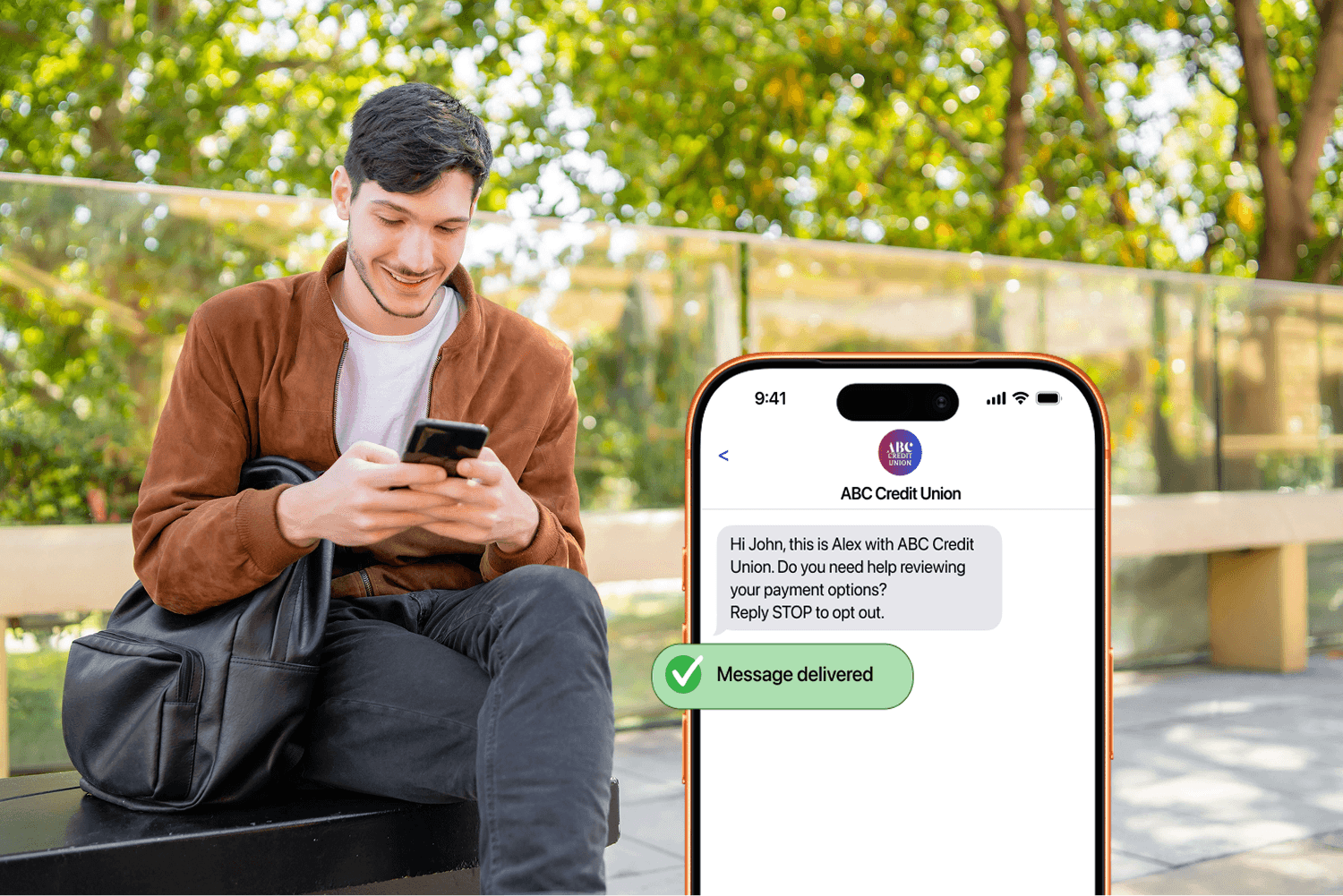
The following text message templates illustrate how to combine clarity, convenience, and respectful language. Here are a few first-party collector example texts; third-party collectors must disclose that the message is from a debt collector as outlined in federal regulations.
EXAMPLE 1 — UPCOMING PAYMENT REMINDER
“Hi [Name], this is [Company]. Your payment is due [Date]. Visit [Secure Link] to review your options. Reply STOP to opt out.”
EXAMPLE 2 — ACCOUNT FOLLOW-UP
“Hi [Name], [Company] here. Please review an important account update at [Secure Link] or call [Phone]. Reply STOP to opt out.”
EXAMPLE 3 — PAYMENT ASSISTANCE
“Hi [Name], this is [Company]. Need help reviewing your payment options? Contact us at [Phone]. Reply STOP to opt out.”
These are illustrative templates, not ready-to-send legal forms. Collection communications must include all disclosures applicable to their context. Review and adapt each example accordingly.
How conversational AI improves the collections experience
Managing high-volume outreach manually puts pressure on collections teams, particularly when consumers expect prompt responses.
Conversational AI solutions help organizations scale routine communication while preserving opportunities for personalized engagement.
With Verse, collections teams can automate two-way SMS outreach, engage consumers on their preferred schedule, and encourage inbound conversations.
Instead of relying solely on outbound dialing, teams can guide consumers toward callbacks, secure online resources, or an appropriate next step. Automated engagement also gives representatives more time to handle sensitive disputes and complicated account situations.
Verse’s trustContact compliance capabilities support responsible outreach through safeguards designed around communications regulations like TCPA and Reg F, data protection, and consumer trust.
Verse also includes ringless voicemail drops, another form of respectful, scalable outreach that validates the SMS message while allowing recipients to read and respond on their own terms.
Verse’s omnichannel, scalable approach powers a collections outreach strategy that respects both business objectives and customer needs.
Build a smarter, consumer-first collections strategy with Verse
Successful debt collection begins with reaching the right person, at the right time, through a channel they can use comfortably.
SMS creates opportunities to improve engagement, streamline outreach, and make account resolution more accessible. But those advantages depend on thoughtful messaging, reliable compliance controls, and respectful consumer interactions.
Verse helps collections organizations modernize their outreach with AI-powered, two-way conversations designed to encourage meaningful responses and reduce the burden of traditional outbound calling.
Ready to improve collections engagement? Explore Verse’s AI collection solution and book a demo to see how conversational AI can support your team.