

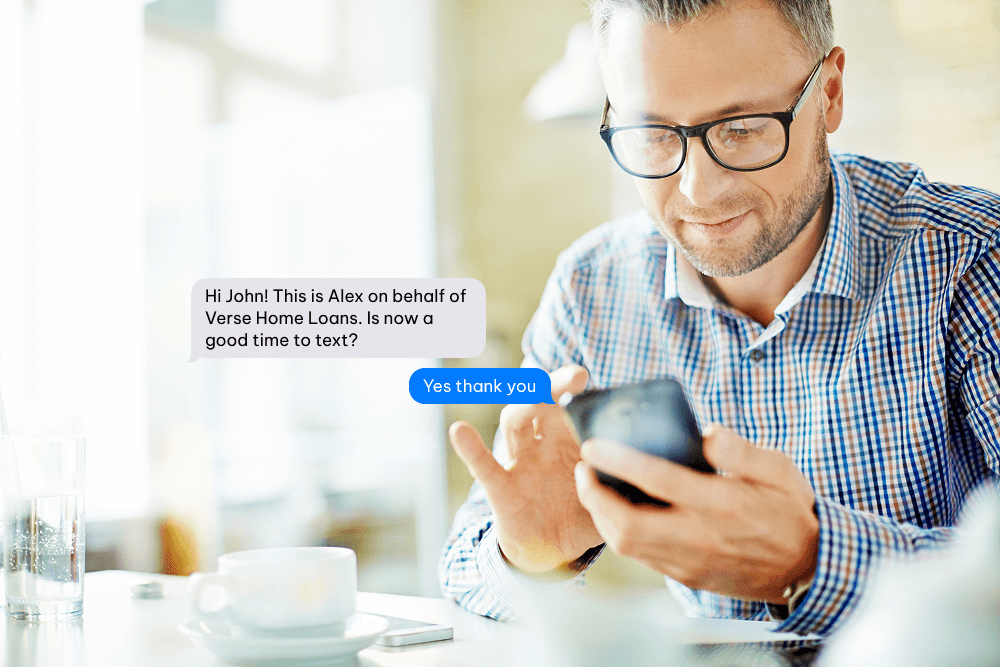

98% of texts are read, and 74% of people respond to a text from a business within one hour.
Those are some crazy good numbers. However, while the potential for SMS engagement is sky-high, the majority of businesses don’t enable two-way SMS.
This can be a costly mistake and leave SMS strategies delivering lackluster results. But the problem isn’t texting…it’s how you’re texting.
Texting works best when it’s two-way, meaning that recipients can reply to texts from a business. If SMS has yet to deliver substantial results for your business, you might want to turn on replies.
Static, one-way messages are out. Two-way, authentic, real-time conversations are in.
In this blog, we’ll dive into two-way texting, including examples, use cases, benefits, and tips for implementation.
What is two-way SMS?
Two-way SMS, or conversational SMS, simply allows customers to reply to your text messages. One-way texting delivers messages to your customers, but any replies they send back go unanswered.
Most text message solutions, especially for SMS marketing, only allow for one-way communication. This is great for getting messages read, but not so great for actually using the power of texting to your advantage.
While one-way texting can be used for product news, receipts, or automated confirmations, it’s less useful for real conversations and connections with customers.
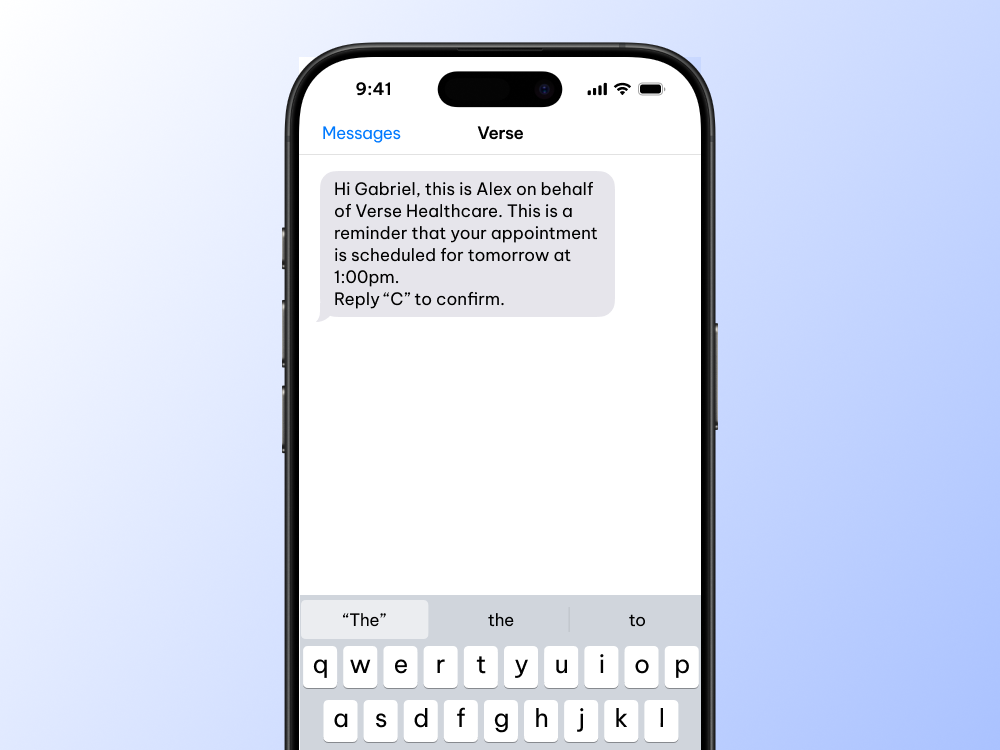
For example, “Reply C to confirm” messages fall under one-way SMS because the recipient can’t really reply. Two-way texting allows recipients to reply with whatever they want, and the sender to do the same.
Here’s an example of one-way texting.
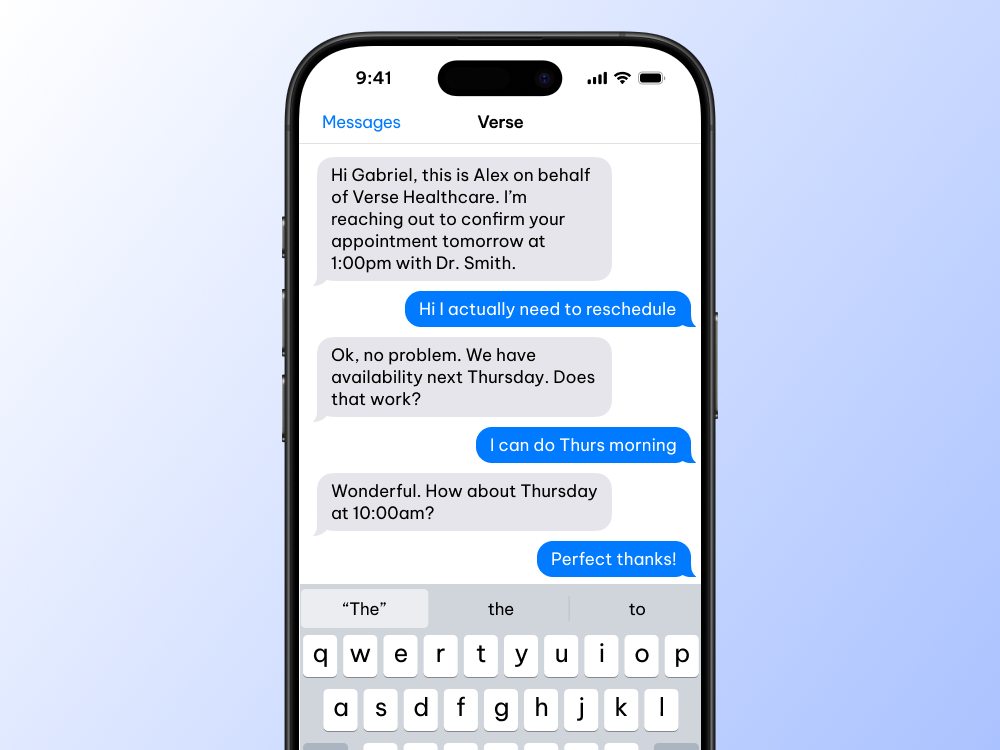
On the other hand, two-way SMS has a huge variety of use cases, from promotion to appointment setting and lead qualification—all conveniently from the customer’s smartphone. No hopping on a call, waiting on hold, or waiting for an email back.
Here’s an example of two-way texting and how it differs from the one-way version:
Comparison: One-way vs. two-way SMS
| One-way SMS | Two-way SMS |
| Recipients cannot reply | Recipients can reply with whatever they want |
| Often used for SMS marketing or confirmations | Can be used for any customer conversation |
| Used for product awareness | Fosters connection with customers |
| Always initiated by the business | Can be initiated by either party |
| Can be used for mass communication | Can be used for mass communication |
| Requires SMS compliance | Requires SMS compliance |
Short codes vs. long codes
When sending SMS, you can use short codes or long codes (10DLC). Short codes are 5-6 digit numbers, usually used for mass SMS marketing or one-way messaging. These include marketing promotions, TV show voting, and sending alerts.
10DLC, which stands for 10-digit long codes, look more like regular phone numbers and can have area codes local to your business. These numbers are best for two-way messaging as they are recognizable as a “real” and legitimate phone number.
Use cases for two-way texting
Two-way SMS works for any conversation you want to have with your customers, meeting them where they are, when they are ready. It’s a convenient way to engage with marketing, sales, and service.
Here are a few standout use cases for two-way texting—though the possibilities are endless.
Appointment scheduling and reminders
Appointment setting is an easily-applicable use case for two-way SMS.
Via text, customers can:
- Set appointments at a time that works for them.
- Get reminders for their appointment (that they actually read).
- Confirm, reschedule, or cancel appointments.
Promotional offers
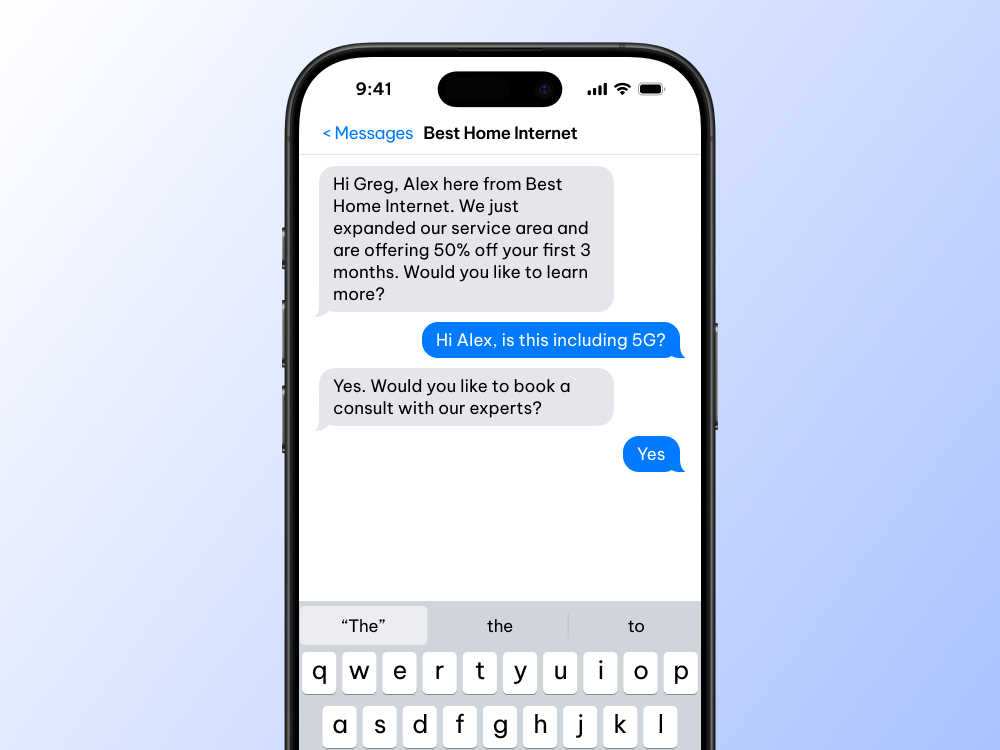
Want to make sure that customers know about your latest offer and can take action right away? Use two-way texting.
Here’s an example of how two-way texting enables customers to capitalize on your offer right from the conversation.
Order or service updates
Texting is a great way to update customers about their purchases, whether that’s products or services. Two-way texting, though, allows them to proactively seek information and ask questions about their purchase.
This type of real-time update system—with the ability to actually interact with your business—can be a key differentiator in terms of customer experience and satisfaction. For industries supporting huge, life-changing financial decisions, like mortgage or home building, this is especially important.
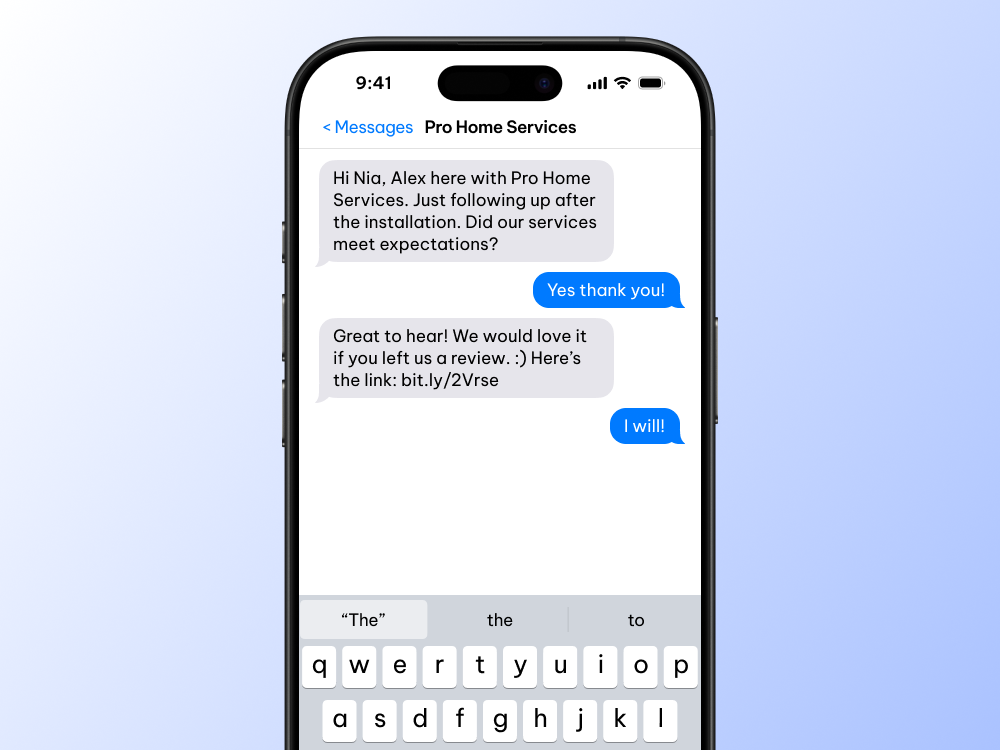
Surveys and reviews
Surveys are a great way to not only gauge customer satisfaction, but ensure that satisfied customers are prompted to leave excellent reviews. According to research by Power Reviews, 96% of consumers say that reviews and ratings are the most influential factors in their purchase decisions.
With two-way texting, you can easily send out customer surveys. For satisfied customers, you can ask them to leave a review—with just one click, they can be directed to Google Reviews.
Lead qualification
For marketing and sales teams, lead qualification is an ever-present, time-consuming challenge. With two-way texting, your team can qualify leads quickly via SMS.
Because text is convenient and timely, it’s a natural choice for faster lead qualification that leads engage in anywhere, anytime (unlike phone calls).
Verse research shows that customers like this, too—qualifying questions see up to a 92% answer rate! On average, qualifying texts have higher-than-average answer rates, indicating that leads are eager to speed up the qualification process.
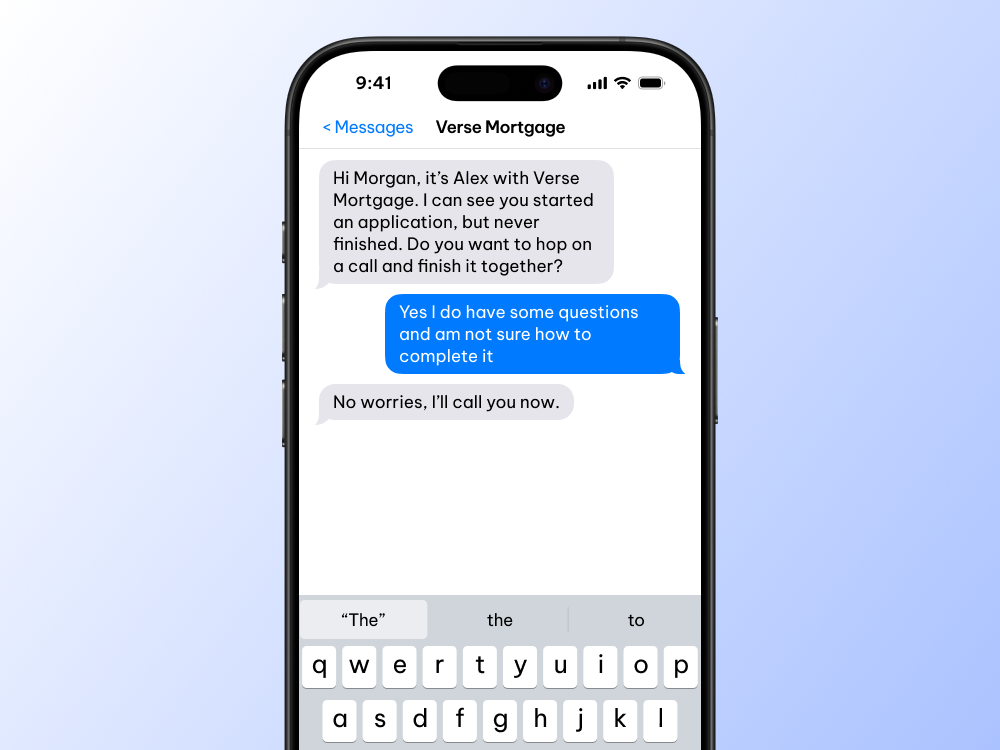
Abandoned cart or form fill
For potential customers that added a product to their cart, or started filling out an application but never finished, a quick ping via text can hook them back in.
Because texts are almost always read, texting is a great way to remind them that they want to move forward with your company. In addition, two-way SMS allows them the opportunity to get help with their purchase or any concerns they might have.
Follow-up and nurture
Follow-up is one of the most important cornerstones of any sales strategy—and what better way to follow up that via text?
With two-way SMS, sales teams can send a follow-up ping directly to the prospect’s phone, boosting the likelihood that they’ll not only see it, but message back quickly. If they have any questions or concerns, they can easily engage with sales via text.
Text even works well for long-term nurture, gently reminding prospects that your business is ready to help whenever they are. This works really well with promotional offers. Verse, for example, nurtures prospects via text for up to six months.
Benefits of two-way SMS
Texting in general has a host of benefits for businesses, especially in terms of engagement rates.
 Two-way texting is great for marketing and sales, as it cost-effectively sends personalized, real-time messages directly to the device your prospects have on them 24/7. Giving them the right message, with the ability to message back right away, is much more cost-efficient than using traditional channels.
Opening up text conversations improves reply rates significantly. In addition, it can:
- Improve customer experience by offering an easy method of contact and a way to book appointments quickly.
- Decrease no-shows with appointment scheduling capabilities.
- Drive revenue by sending promotions and reminders directly to customers’ smartphones and boosting read and reply rates for sales follow-up.
- Gather customer satisfaction data by sending surveys.
- Collect more reviews by surveying and prompting customers to leave one via text.
- Save employee time and increase qualification rates by qualifying leads via text.
Tips for using two-way texting
If you’re sold on two-way SMS, let’s go over a few tips businesses will need to implement it effectively.
Proper opt-ins and opt-outs
In order to text your customers, businesses must ensure full SMS compliance. This means adhering to texting laws such as the TCPA, which mandate both compliant opt-ins and opt-outs.
Put simply, opt-ins must obtain express prior written consent that businesses may text recipients. Opt-outs must be functional, and systems should process standard opt-out keywords (for example, “STOP”) automatically. See our full guide here for all requirements.
Only text after opt-in
Along those same lines, you should only ever text people who have compliantly subscribed to receive text messages from your business.
Never text consumers who have not given express prior written consent for you to do so. This can not only lead to significant fines, but block message deliverability in the future.
A/B testing
Like any marketing channel, you’ll need to test what messaging works best for your audience. With SMS, it’s very easy to segment and A/B test your texts to see which ones result in more replies or close more sales.
This is especially relevant for two-way texting. If you want to increase the responses you get from customers, you’ll want to monitor, analyze, and optimize your campaigns for replies.
Reply quickly
Specific to two-way SMS, you’ll want to reply quickly. According to HubSpot, 66% of buyers expect a response within 10 minutes to any marketing, sales, or customer service inquiry.
It’s best practice to reply to texts as fast as possible—ideally, five minutes or less. Though this can be an issue for team bandwidth, SMS services (like Verse) can help get your response time down without overloading your team.
Integrate texting with your CRM
In order to properly track leads and the customer journey, be sure that any texting software you use can sync with your CRM. This improves visibility and reduces the risk of conflicting or duplicate messages.
Key takeaways: Why two-way SMS matters